
Curated paper selection for the right feel and finish
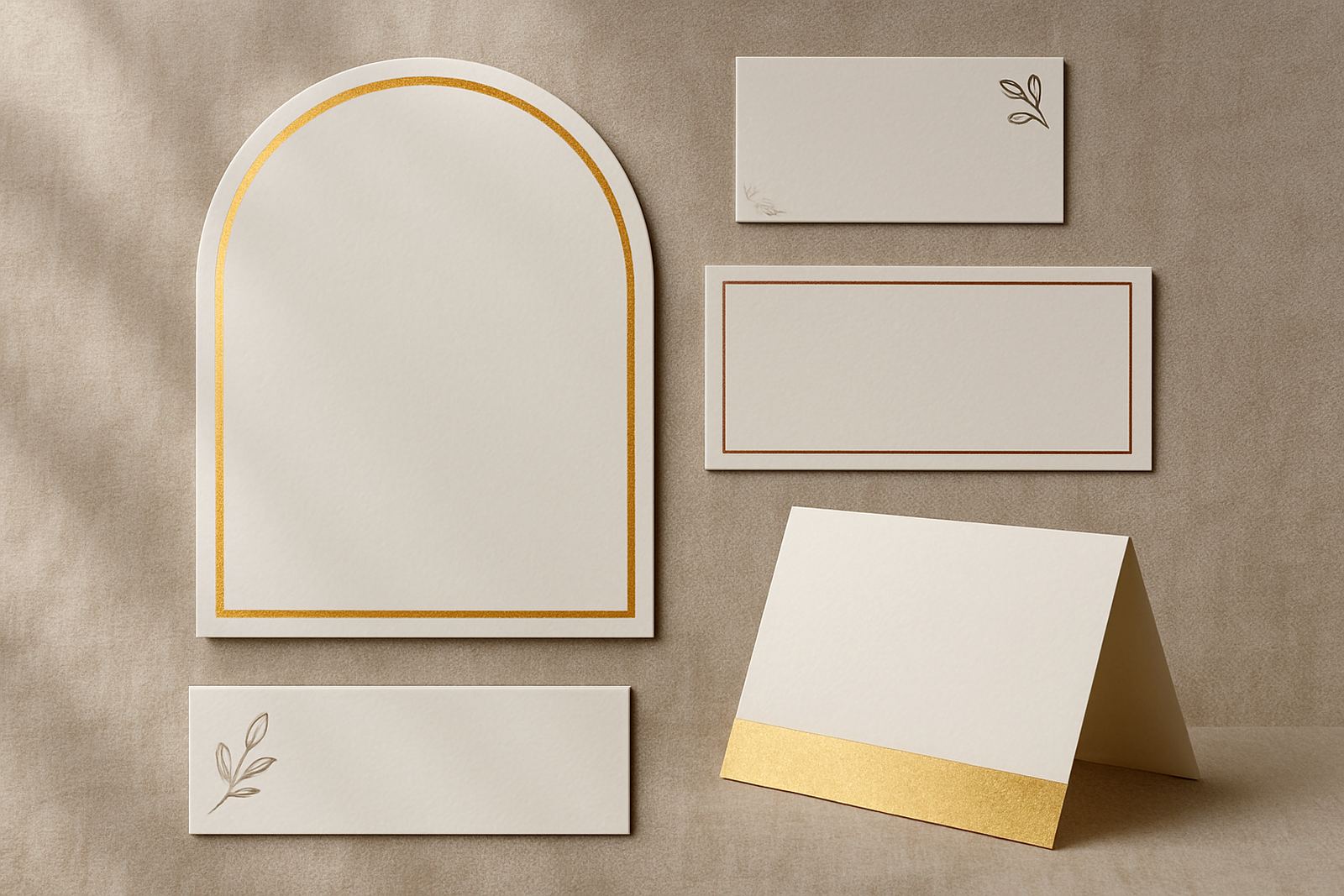
Paper sourcing starts with how the piece must feel in the hand. Some clients want a soft cotton texture for understated invitations, while others want a smooth coated sheet that gives crisp detail and a sharper foil edge. We keep the selection practical: weight, colour, finish, print compatibility and how the stock behaves once it is scored, folded or foil stamped.
For wedding invitations and premium stationery, common options include 250 gsm to 350 gsm cover stock for cards, 120 gsm to 160 gsm for inserts, and heavier boards up to 600 gsm for layered elements and presentation folders. White, ivory, warm cream, blush, charcoal and muted natural tones are popular, but the best result often comes from a paper that sits quietly behind the design. That is where our experience matters, because the wrong surface can mute foil or make lettering look too thin.
- Textured, smooth and laid finishes available depending on the brief
- Matched components for invitation cards, inserts, envelopes and belly bands
- Paper advice for foil stamping, letterpress finishing and envelope addressing
- Options suitable for coastal humidity and courier handling
What we include in the sourcing service
Our paper sourcing service is more than choosing a colour card. We look at the full stationery set and select paper that works across the whole suite. If the invitation is foil stamped, the insert is digitally printed and the envelope is hand addressed, the stock still needs to feel like one collection. We check consistency in tone and thickness so the finished order looks considered, not pieced together.
We also source supporting items such as insert cards, envelope stock, backing boards and wrapping paper for suite assembly or gift packaging. Where needed, we can suggest paper that folds cleanly without cracking and holds wax seals or ribbon well. In Cape Town, where some clients collect from Woodstock and others need couriered sets nationwide, sturdy stock selection matters because corners and edges take a beating in transit.
- Stock matching for invitations, RSVP cards, menus and event day stationery
- Advice on fold lines, grain direction and scoring requirements
- Envelope and lining paper options for full suite coordination
- Paper suitable for limited runs, personalised names and mixed print methods
How the paper sourcing process works
We begin with the brief. That includes the occasion, budget, print method, final size and the mood you want the stationery to carry. A classic wedding suite in Stellenbosch may call for warm ivory and cotton texture, while a coastal event in the Atlantic Seaboard could need a cooler white with a cleaner finish. Once we know the brief, we narrow the choice to stocks that suit the design and production method.
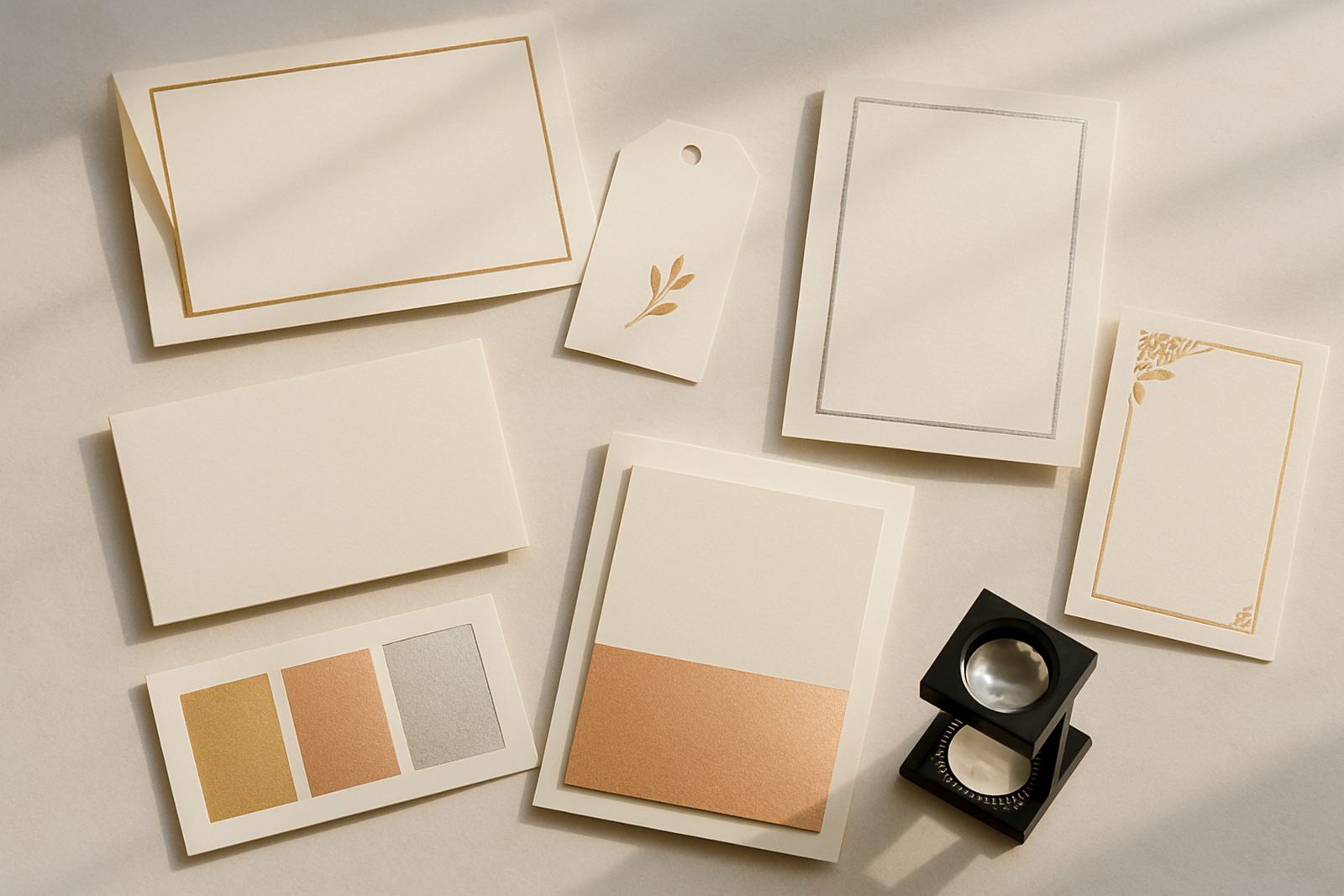
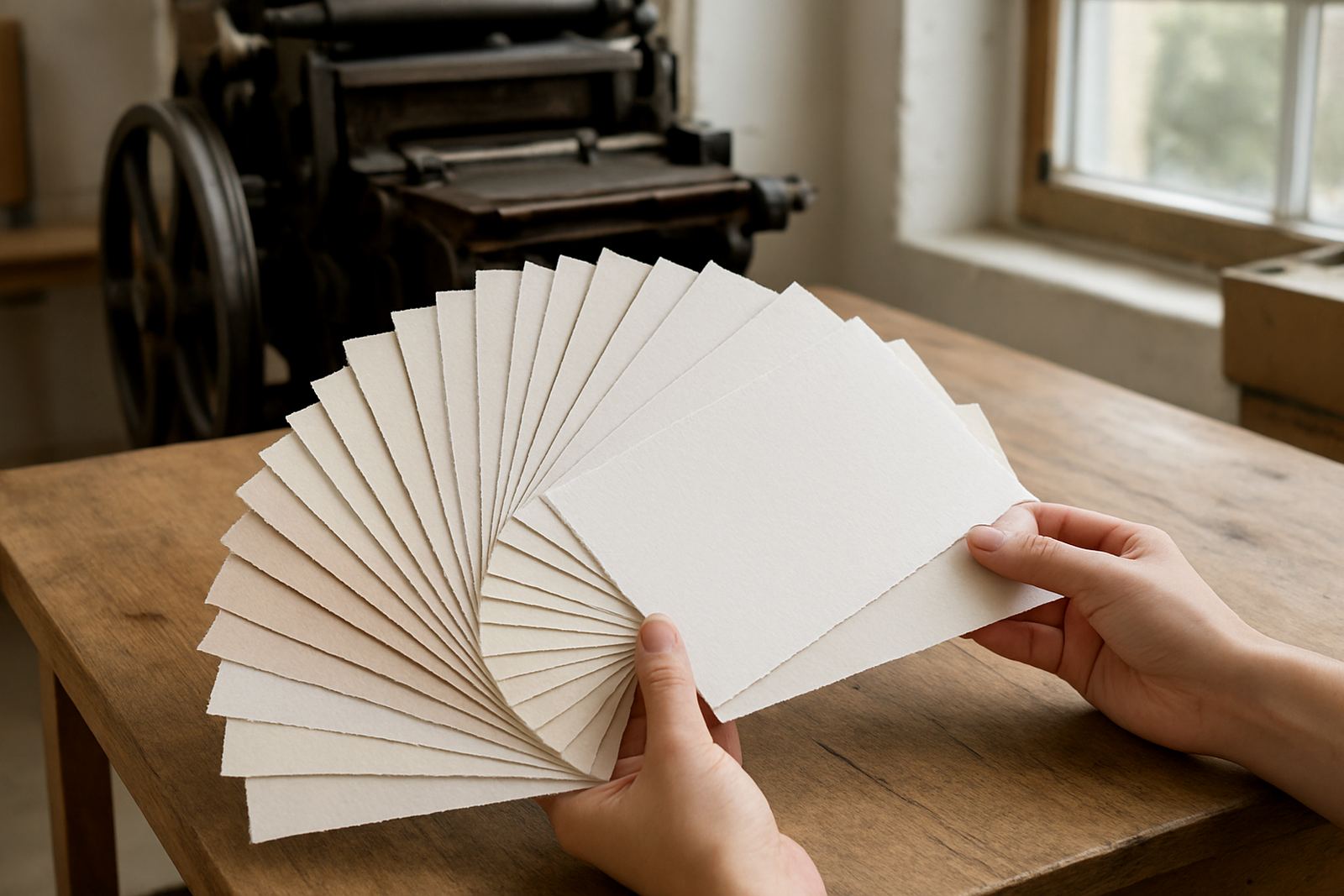
The next step is sampling and approval. We can guide you through swatches, sample sheets and finish comparisons so you can see how foil, embossing or simple typography sits on each paper. If colour matching is required, we compare against reference artwork, floral tones or printed elements already in the suite. After approval, we order the stock, confirm quantities and plan the production schedule around lead times from the paper mill, local suppliers and courier cut offs.
- Brief and requirements review
- Paper selection and sample confirmation
- Quantity planning and stock reservation
- Ordering, receiving and quality check
- Cutting, proofing and production handover
Turnaround times and stock planning
Turnaround depends on the paper family chosen and how much is needed. Standard sourced stocks that are already in local supply can often be secured within 2 to 5 working days once approved. Special order papers, heavier boards and imported textures may take longer, especially when a full suite needs matching envelopes, inserts and backing pieces. We always plan with a margin so the stationery does not arrive rushed before assembly or guest personalisation.
For wedding work, we recommend allowing 2 to 4 weeks from brief to final stock approval, then another 1 to 2 weeks for production depending on quantity. If the order includes foil stamping, addressing, suite assembly or gift packaging, the timeline should be set early. Load shedding and courier delays can affect production flow, so we sequence jobs carefully and keep the client updated if any stock is running close to a cut off. That sort of planning saves stress later on.
- Local stock: usually 2 to 5 working days after approval
- Special order or imported paper: allow extra lead time
- Complex suite orders: allow 3 to 6 weeks in total
- Rush requests assessed case by case, depending on stock and finishing
Pricing approach that keeps the brief clear
Paper pricing is based on the actual stock selected, the sheet size, the quantity and any special handling needed. A simple flat stock for inserts will cost less than a textured cotton board or a heavily coated paper that needs careful folding. If multiple papers are used in one suite, we price each component so you can see where the budget sits. That helps when balancing invitation cards, RSVP cards, envelopes and presentation extras.
We do not push unnecessary upgrades. Instead, we explain where a premium paper changes the result and where a standard option will do the job well. If you have a target spend, we work within it and suggest the most effective combinations. For clients in Cape Town, Johannesburg, Durban and smaller towns too, this keeps the process practical because courier costs, stock availability and assembly time all play a part in the final price.
- Quoted per project, based on stock type and quantity
- Clear pricing for mixed paper suites and add on items
- Budget friendly alternatives offered where the finish allows it
- Courier and handling costs discussed before confirmation
Paper care, storage and review intervals
Paper is sensitive to moisture, heat and handling, especially in coastal areas like Woodstock and the Atlantic Seaboard where humidity can creep into storage rooms. We recommend keeping stock flat in a dry space, away from direct sunlight and open windows. If you are collecting and storing stationery before an event, avoid stacking heavy items on top of the boxes because edges can mark quickly on softer paper.
For active event planning, we review the paper choice at key points: at brief stage, after sample approval and again before production starts. If the order is held for more than 4 to 6 weeks, we recheck the stock condition before cutting or stamping. That is especially useful for clients planning well ahead, because the paper that looked perfect in summer may need a rethink once the weather changes or the guest count shifts. A small check now can prevent waste later.
- Store flat in a cool, dry room with low direct light
- Avoid damp boxes, warm cars and windowsills
- Review stock before production if the order has been on hold for 4 to 6 weeks
- Allow extra care for textured papers and uncoated finishes
Key facts
| Service area | Woodstock, Cape Town and couriered stationery nationwide |
|---|---|
| Typical paper weights | 120 gsm to 600 gsm depending on the suite |
| Common finishes | Smooth, textured, laid, cotton and lightly coated stocks |
| Use cases | Wedding invitations, inserts, menus, event day stationery and gift packaging |
| Lead time | 2 to 5 working days for standard local stock, longer for special orders |
| Review interval | Recheck held stock after 4 to 6 weeks before production |