Wax seals that suit formal, coastal and garden weddings
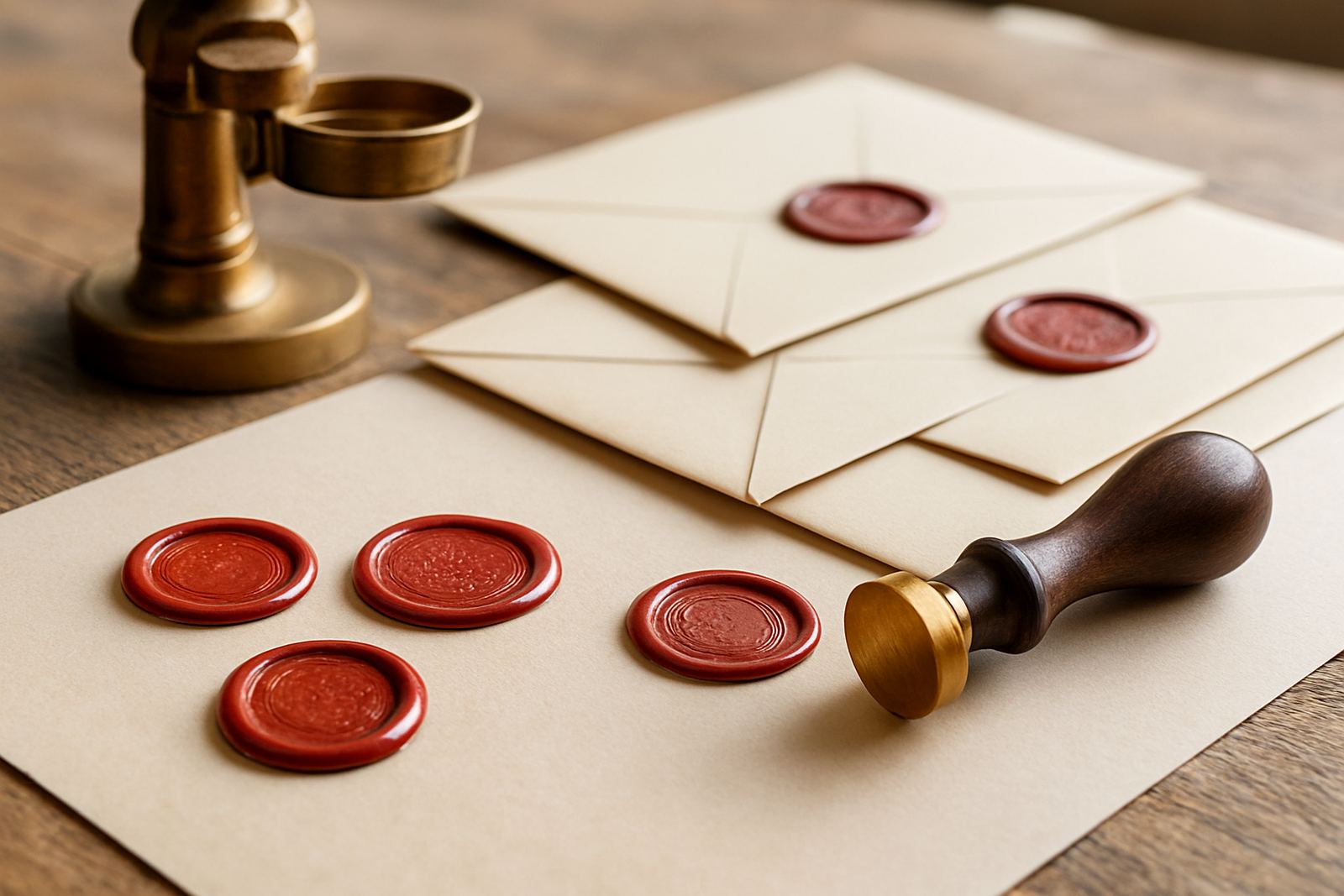
Wax seal finishing is a small detail, but it changes the whole feel of a stationery suite. It works well for wedding invitations, RSVP cards, enclosure envelopes, menus, thank you notes and keepsake boxes, especially when you want a tactile finish that feels considered rather than overdone. In Cape Town we see a lot of requests for clean, modern styling with soft neutrals, pale blush, deep green and metallic accents, and wax sits neatly within that look.
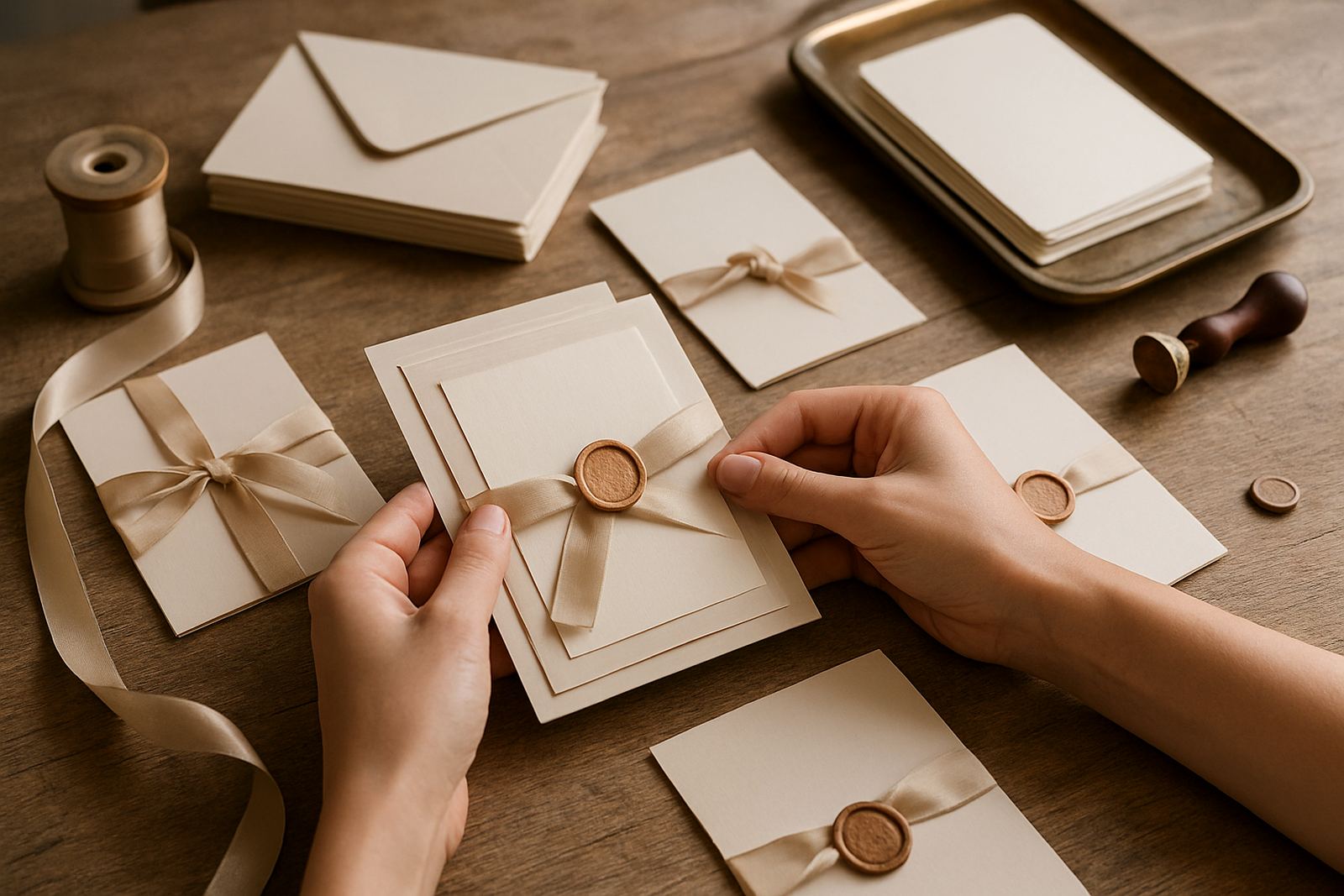
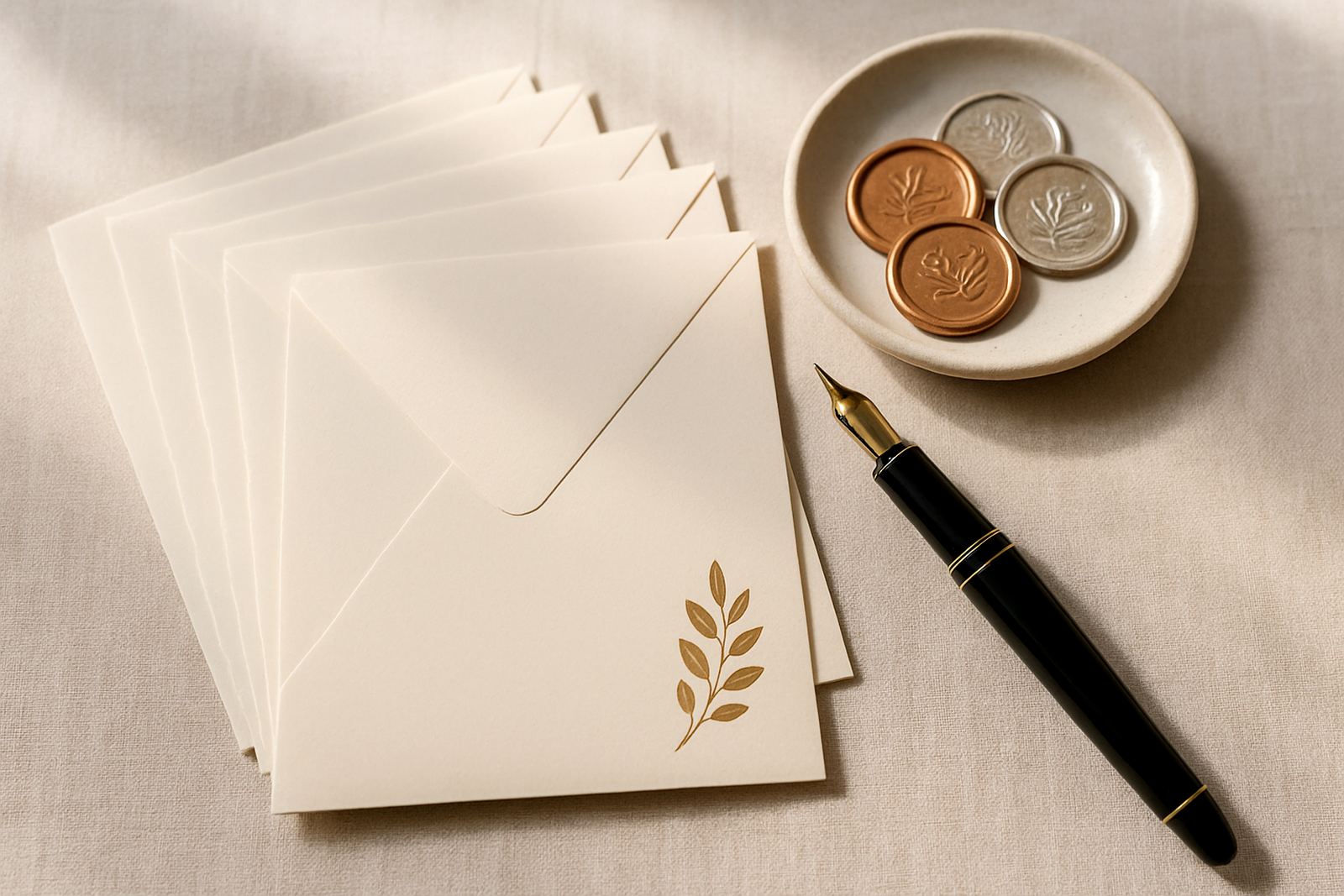
We apply decorative seals to selected pieces using a controlled process that keeps the finish neat and repeatable. The seals can be used as a front detail, a closure, or a feature on a sleeve, but they must be suited to the paper weight and the way the pack will travel. For invitation packs sent by courier, we always check that the seal placement will handle handling in transit. On heavier card stocks and folded enclosure pieces the result is usually better, as there is less movement and less risk of scuffing.
- Suitable for invitation envelopes, belly bands, gift boxes and keepsake items
- Works best on smooth, coated or lightly textured surfaces
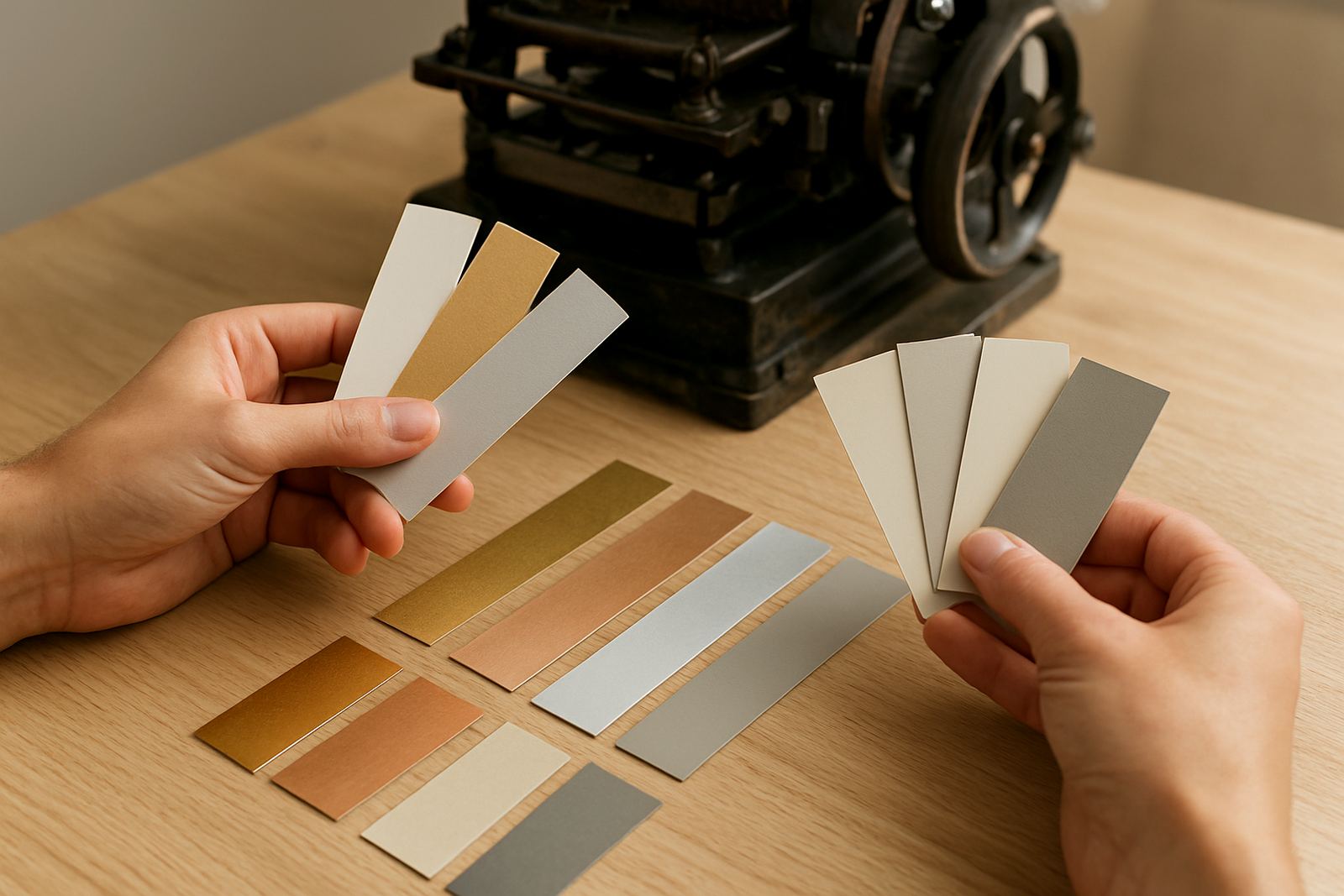
- Can be paired with foil stamping, envelope addressing and suite assembly
- Ideal for small runs where a hand-finished look matters
What is included in wax seal finishing
Our wax seal finishing service is more than pressing a seal onto paper and hoping for the best. It includes material guidance, layout checks, seal placement and finishing that is matched to the item type. For invitation suites, that often means testing the seal size against the envelope flap, belly band or pocket fold so the proportions sit correctly. If the wax is too large it can overwhelm the design, and if it is too small it tends to disappear visually.
We can apply seals as a flat decorative mark or as part of an assembly, depending on how the pack is being presented. Where needed, we also advise on the use of adhesive backing, especially for items that are being couriered nationwide and may be handled several times before arrival. In coastal areas like the Atlantic Seaboard, humidity can affect some papers and adhesives so we plan the finishing method with that in mind.
- Wax seal size guidance for 25 mm, 30 mm, 35 mm and 40 mm options
- Placement advice for envelope flaps, card corners and keepsake packaging
- Finish checks for colour match, adhesion and handling
- Coordination with other stationery services such as foil stamping and envelope addressing
Our finishing process from proof to packed stationery
We keep the process practical and clear. Once your enquiry comes through the contact form, we confirm the stationery items, the intended seal style, and whether the seals need to be applied in studio or supplied for assembly. From there we prepare a sample direction and check the seal size against the rest of the suite. If you are sending files for invitation packs, artwork proofing happens before final application so the spacing and positioning are correct. It saves time later, and avoids rework.
After approval, the finishing team prepares the wax, tests the application on the chosen stock and continues with production. Where packs are being assembled, we work in a defined sequence so the seals are added at the right stage. Some items are sealed before folding, others after closure, depending on the design. Our production manager keeps an eye on batch consistency, while the finishing specialist checks the final result for clean edges and even placement. It is a patient process, not a rushed one.
- Enquiry and item review
- Seal size and placement recommendation
- Artwork or layout proofing where needed
- Production, finishing and quality check
- Courier-ready packing for local or nationwide delivery
Turnaround times and how load-shedding affects planning
Turnaround depends on the number of seals, the number of pieces in the suite and whether the wax seal finishing is part of a broader stationery order. For small decorative runs, we can usually work within a few working days once the layout is approved. Larger wedding orders, especially those with suite assembly and courier packing, need more lead time. As a practical rule, it is best to allow at least two to three weeks before dispatch, and longer during peak wedding season.
Load-shedding, courier timing and venue deadlines all play a part in planning. In Woodstock we schedule finishing tasks around power availability where needed, and we factor in drying or setting time for the completed pieces. If your stationery needs to go to Stellenbosch, Paarl or Somerset West, we also allow for courier lead time and any local delivery constraints. It is better to build in a few extra days than to cut the schedule too tight.
- Small runs: often 3 to 5 working days after approval
- Standard wedding orders: allow 10 to 15 working days
- Larger multi-piece suites: allow 2 to 3 weeks or more
- Courier transit time is extra for nationwide delivery
Pricing that matches quantity, complexity and material choice
Wax seal finishing is priced according to the number of seals, the complexity of application, the seal size, the stock being used and whether the work forms part of a full suite. A simple repeat application on envelopes costs less than a fully assembled invitation pack with multiple pieces. If the order includes colour matching, personalised artwork, envelope addressing or gift packaging, we quote those items separately so the pricing stays clear.
We do not use a one-price-fits-all model because stationery orders vary too much. A 30 mm seal applied to 50 envelopes is very different from 250 seals applied to mixed invitation packs with ribbons and inserts. For clients wanting exact control over budget, we can suggest practical alternatives such as using seals only on the outer envelope, or on a single feature piece rather than every component. That keeps the finish special without pushing the cost too high.
- Quantity affects unit cost
- Hand application and assembly affect labour cost
- Special papers and mixed finishes may need extra testing
- Courier and packaging are quoted according to destination and pack size
Maintaining the finish for keepsakes and repeated use
Wax seals are decorative, but they still need to be handled properly if you want them to stay neat. Once applied, avoid stacking heavy items directly on top of the seal area, especially if the pack is travelling in warm weather. In summer heat or coastal humidity, seals can soften slightly if they are exposed for long periods, so finished pieces should be stored flat in a cool dry place. If the piece is intended as a keepsake, a box or sleeve helps protect the surface.
For event stationery that will be used over several days, such as menus or name cards, we can recommend whether a wax seal is the right choice or whether a less delicate finish is more suitable. In some cases, a seal used on an envelope or packaging sleeve gives the look you want while keeping the main printed item easier to handle. If the order needs regular handling, we will say so upfront rather than pretend every finish suits every purpose.
- Store flat and out of direct sunlight
- Avoid pressure on sealed areas
- Use sleeves or boxes for keepsake protection
- Ask for a handling recommendation if the pack will be posted or reused
Key facts
| Service area | Woodstock, Cape Town and couriered nationwide across South Africa |
|---|---|
| Typical seal sizes | 25 mm, 30 mm, 35 mm and 40 mm |
| Best stock weight | Usually 250 gsm and heavier, depending on the item |
| Lead time | 3 to 15 working days for most orders, depending on volume |
| Finish options | Flat decorative seals, closures, featured accents and suite integration |
| Minimum order note | Best suited to small custom runs or full invitation suites |