
Stationery That Matches the Way You’re Getting Married
Every wedding starts with a different brief. Some couples need formal invitations for a ballroom reception in Cape Town, while others want a smaller suite for a garden ceremony in Stellenbosch or a coastal celebration on the Atlantic Seaboard. We build the stationery around how you are actually getting married, not around a standard pack.
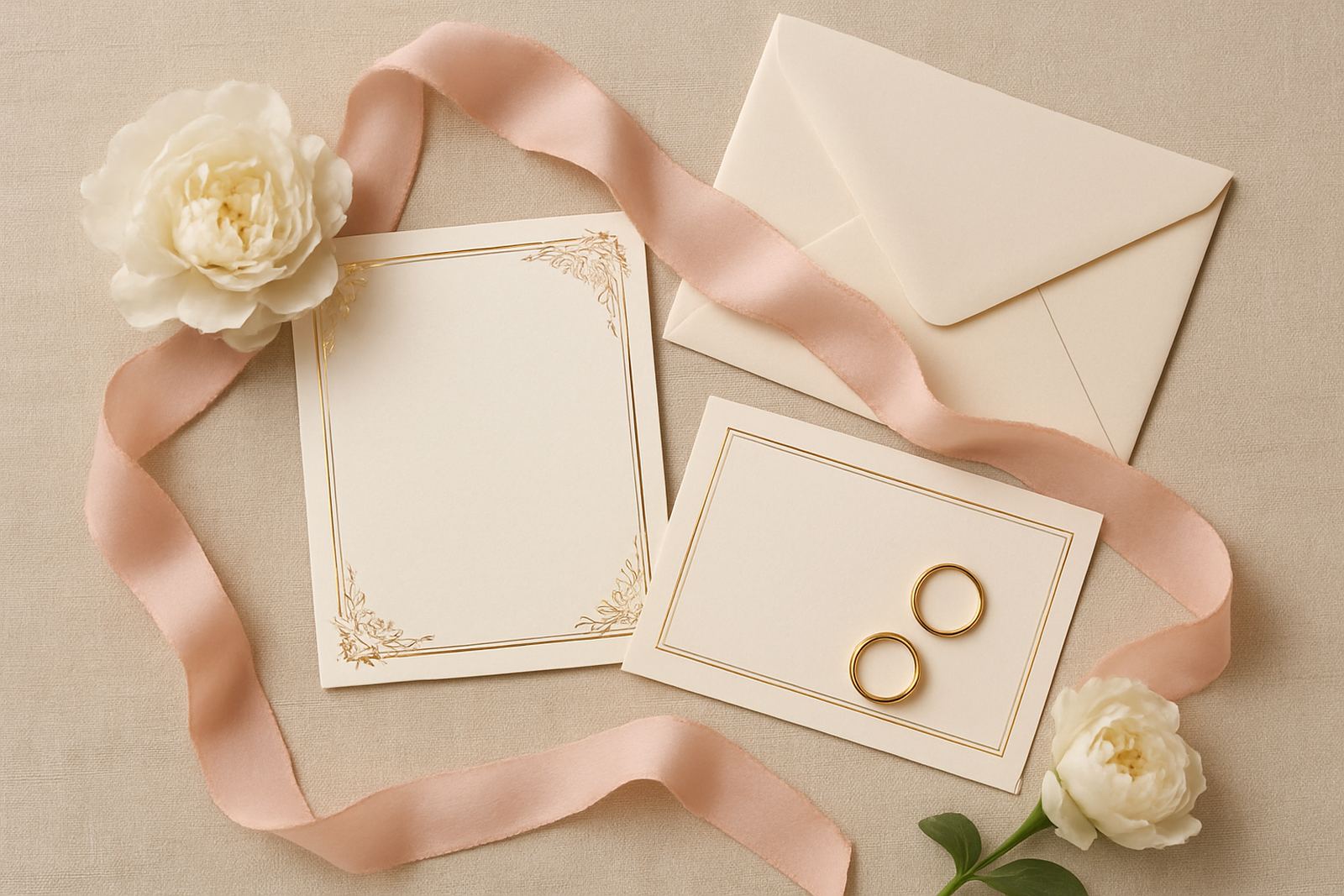
For weddings, the usual starting point is an invitation suite with an invitation card, details card, RSVP card if needed, and envelope addressing. From there, couples often add welcome signs, table numbers, menus, place cards, gift tags, seating plans and thank-you cards. Foil stamping adds a clean metallic finish that works well on textured papers, thick boards and soft neutral colours.
In Woodstock, where humidity and traffic can affect timing, we plan production with enough margin for proofing, finishing and courier movement. That matters especially when your guest list changes late or your venue requests final print 2 weeks earlier than expected.
What a Wedding Suite Usually Includes
A complete suite does not have to mean every item possible. It means the pieces you need are consistent in size, wording and finish, so they feel like one set. We help you choose what belongs together and what can be left out to keep the budget in check.
- Save the date cards for early notice
- Main invitation card with wedding details
- RSVP card or digital RSVP note
- Direction or accommodation card
- Envelope addressing and guest name formatting
- Day-of pieces such as menus, place cards and table names
- Wax seals, belly bands or ribbon wraps where suitable
For many couples, letterpress finishing is added to the invitation and foil stamping is used for names, monograms or headings. That mix gives depth without making the suite feel overworked. Paper sourcing is important here too, because thin stock can buckle under heavy coverage and humid weather near the coast can show it quickly.
Planning Your Layout Before You Approve Anything
Good wedding stationery starts with clear layout planning. Before artwork is finalised, we check wording hierarchy, spacing, guest names, venue addresses and the order in which each piece is read. It sounds simple, but this is where many mistakes happen. A beautiful card can still feel awkward if the most important detail is too small or the RSVP information is buried at the bottom.
We usually suggest keeping the main invitation card focused on the essentials: who is hosting, the names of the couple, the date, venue and ceremony time. Extra information can move onto a separate details card. That helps keep the main card elegant and avoids crowding around the foil areas. If you are including multiple languages or cultural wording, the layout needs even more care so that the finished set stays balanced.
For event day stationery, layout planning becomes even more practical. Menu cards need enough space for courses, place cards must be legible from across the table, and seating plans need strong contrast so guests can find their names quickly. If the function is outdoors in Paarl or Somerset West, we also think about sun glare and wind, because both can make lightweight items troublesome.
Common Mistakes Couples Make With Luxury Stationery
Most problems are avoidable if the suite is planned early. One common mistake is leaving printing too late. Once wording is confirmed, there is still proofing, possible corrections, foil tooling, finishing and courier time. In peak wedding season, that timeline can tighten fast.
Another issue is over-ordering the wrong items. Couples sometimes spend on extras that never get used, while forgetting the practical things like direction cards or extra place cards for last minute guest changes. It is better to build the suite around the real event flow than around a long wish list.
- Confirm final guest numbers before ordering place cards and menus
- Check spellings of names and venues, including suburbs and estates
- Allow for courier time to outlying areas and farm venues
- Match envelope sizes to the cards before artwork is approved
- Choose paper weights that can handle foil, addressing and packing
We also see issues when couples try to mix too many finishes. Foil, wax seals, ribbon and layered paper can all work together, but if every surface is competing for attention the suite loses its calm. A simpler approach often looks more expensive and prints cleaner too.
Budget Ranges in Rand for Wedding Stationery
Wedding stationery budgets vary a lot depending on guest count, paper choice and how many pieces are included. A small, well finished invitation suite for a modest guest list is quoted per job. A mid-range suite with custom design, foil stamping, RSVP cards and envelope addressing is quoted per job. Ask for a quote
For larger weddings, layered suites, letterpress finishing, wax seals, gift packaging and full day-of stationery can move the budget quoted per job or more. The biggest cost drivers are usually quantity, number of unique designs, and whether every table item needs separate artwork. Courier delivery nationwide is then added depending on the destination and how quickly the set needs to move. Ask for a quote
If you are working to a set amount, start with the invitation suite first and add day-of stationery later if the budget allows. That gives you the most visible part of the experience without stretching too far. It is better to do fewer pieces properly than to cut corners across the whole order.
From Woodstock Studio to Your Venue Anywhere in South Africa
Our team works from Woodstock in Cape Town and serves couples across the Southern Suburbs, Atlantic Seaboard, Northern Suburbs, Stellenbosch, Paarl and Somerset West, with couriered stationery nationwide. Nadine van Wyk oversees the studio, with Lwazi Mokoena on production, Anke Botha on design, Reece Naidoo on client consultation, Nolwazi Masemola on finishing and Mia Adams coordinating courier movement.
Clients usually start by sending their enquiry through the contact page form. From there, we guide the process step by step: design brief, paper choices, proofing, approval, finishing, packing and delivery. For weddings with tight dates, this structure helps keep the order moving even when guest counts change or venue details are adjusted at the last minute. A little planning goes a long way, and it saves stress close to the big day.
Whether you need a formal black tie suite or a softer botanical look, the aim is the same: stationery that feels considered, practical and worthy of the occasion.