
What a seating chart does at an event
A seating chart helps guests find their table quickly, which keeps arrivals moving and takes pressure off the host, planner or venue staff. It also becomes part of the decor, so the layout has to read clearly from a short distance and still look good in photographs.
In Cape Town, Stellenbosch, Paarl and Somerset West, we often supply charts for weddings, wine estate functions, private dinners and launch events where guests arrive in waves. The point is simple: people should be able to spot their name and table without asking for help, even when the room is busy and the lighting is low.
We prepare charts for final guest lists that are already confirmed, because once names are set the spacing and hierarchy matter. If the list changes late, the artwork needs to be adjusted before print or production, otherwise names can run tight or sit too close to the edges.
Sizes, materials and finish options
Seating charts can be produced in several sizes depending on guest numbers and display style. Smaller boards work well for intimate functions, while larger event charts are better for 80 guests and up, where the list needs more room and stronger visual structure.
- A2 for smaller guest lists and compact entrances
- A1 for medium events with grouped tables
- Large custom formats for high guest counts or statement entry displays
- Rigid board, mounted panel, or board with framed presentation
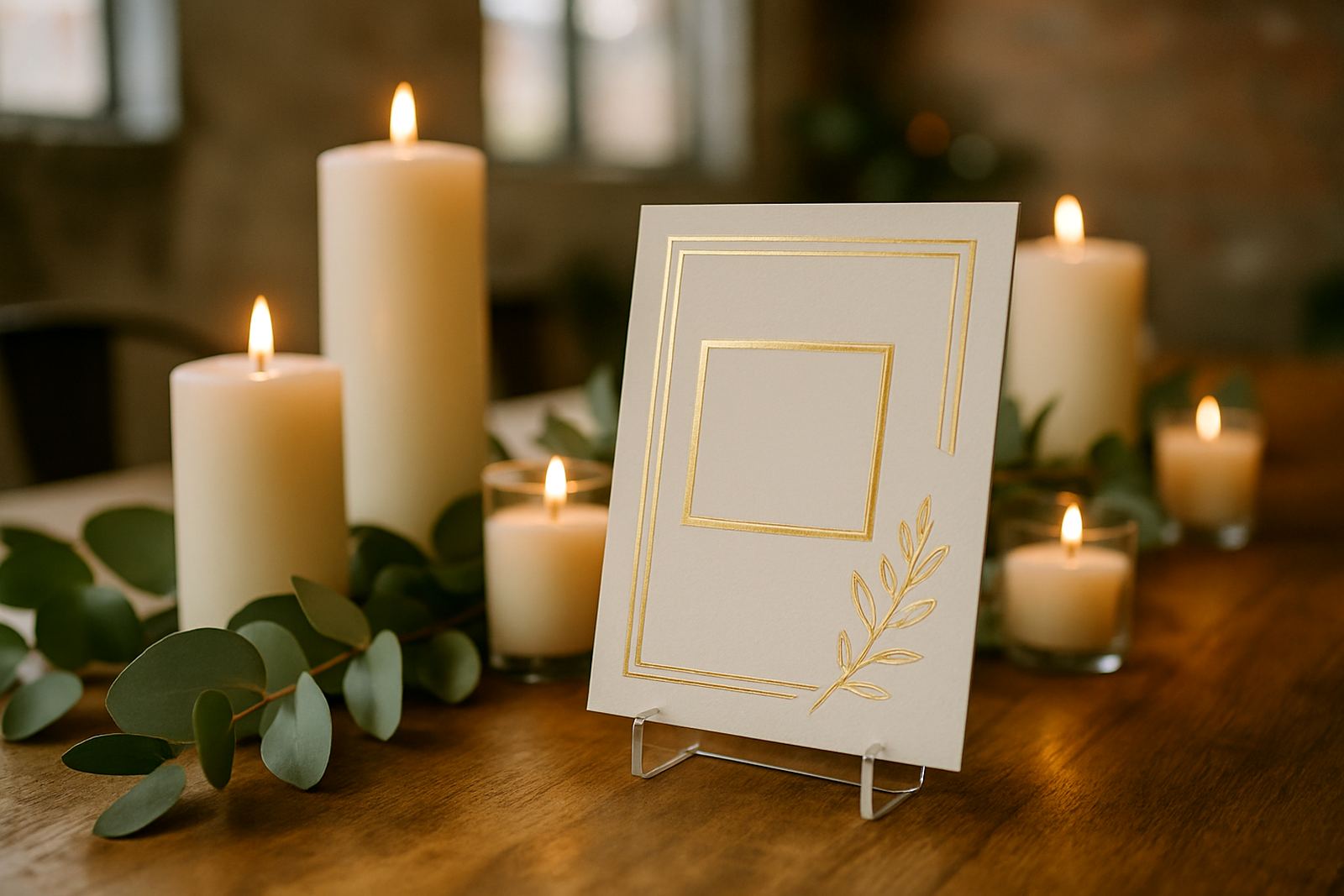
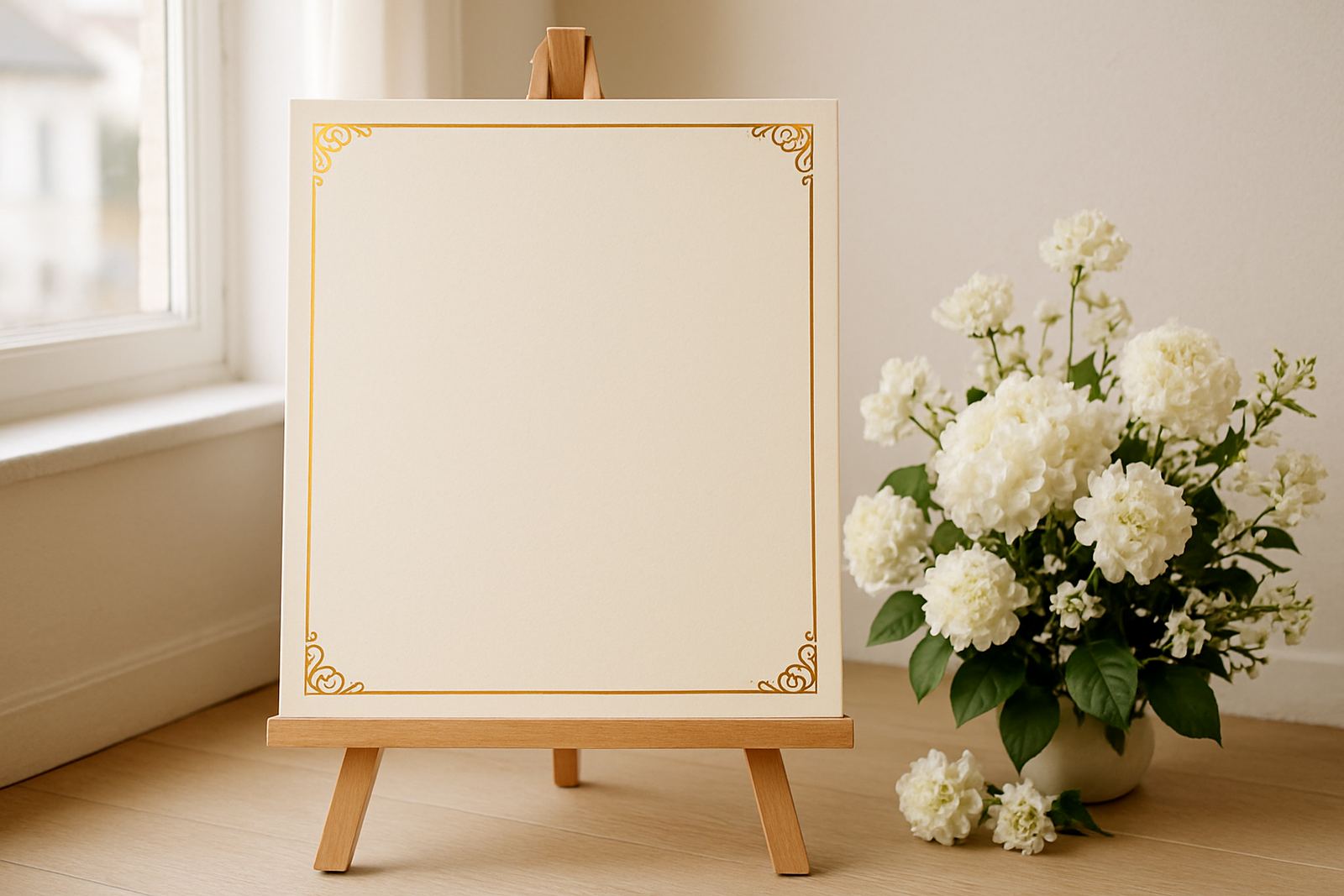
Finishes can include foil stamping, letterpress detail, coloured type, name highlighting and decorative border work. Paper choice is important too. For indoor venues we can use fine papers and mounted boards, while coastal functions in the Atlantic Seaboard or Somerset West often benefit from sturdier backing because humidity can cause curling if the stock is too light.
If you are planning a black-tie reception, a clean white or deep-toned board with metallic detail usually reads well. For garden or estate weddings, softer paper tones and more open spacing often suit the setting better.
Where seating charts work best
These charts suit entrances, reception foyers, cocktail areas and marquee arrivals where guests naturally pause before moving into the main room. They are also useful at venues where the table plan is not immediately visible from the doorway, or where different rooms are being used for ceremony and dinner.
For event teams, the chart should be positioned where it can be seen before the crowd builds up. A chart hidden behind florals, low lighting or a narrow walkway will slow people down. In Woodstock and the Southern Suburbs we often prep layouts for venues with tight entry points, so clear standing space around the board is part of the plan.
- Weddings with 50 to 250 guests
- Corporate dinners and awards evenings
- Private birthdays, milestone parties and family celebrations
- Venue entrances with a formal guest flow
If your event includes a welcome drink area or usher station, the seating chart can work alongside those points so guests know where to go next without stopping the whole queue.
Artwork, proofing and guest list setup
Before production starts, the guest list must be final and correctly spelt, with table names or numbers confirmed in the order they should appear. We recommend checking surnames, double-barrel names, titles and any special table groupings early, because mistakes on a seating chart are hard to fix after printing.
Clear hierarchy makes the chart easier to read. Main names or table headings should stand out, followed by the guest list in a logical order. If there are families, VIP tables or reserved seats, those can be marked in a way that still looks neat. It is worth checking the proof carefully, especially if names have unusual spelling or accents.
- Send the final guest list in one clean document
- Confirm table names or table numbers before artwork begins
- Check spelling of names, titles and partner names
- Allow time for proofing and one round of corrections
We also look at spacing, so the layout does not feel cramped once the names are set. A good chart is not only attractive, it must be easy to read at a glance.
Installation, display and event-day handling
Most seating charts are supplied as a finished piece ready for your venue team or stylist to place on arrival. Depending on the size and format, the chart may be propped on a stand, mounted against a wall, placed on an easel or integrated into a welcome display with flowers, candles or signage.
No power or gas is needed for the seating chart itself. If your wider decor includes lights or candle features, those requirements come from the event setup, not the chart. We do recommend checking the display area before the event so the board size matches the available space and people can stand comfortably while reading it.
For outdoor functions, especially on the coast or in summer heat, keep the chart away from direct wind and moisture. A sheltered position helps prevent warping and keeps the presentation clean. If the venue is open-air, a weighted stand or solid backing is a better choice than a light support that can move around.
Care, transport and what to confirm before ordering
Once the chart is made, it should be handled with clean hands and transported flat where possible. Avoid stacking heavy items on top of it, and do not leave it in a hot car for long periods. South African summer temperatures can be hard on paper and board, especially if the event is on a farm venue or in a coastal area.
For delivery across South Africa, we pack charts carefully so they can travel from Woodstock to your venue or through courier to other provinces. If the chart is very large, it may need special packing or collection arranged in advance. This is worth confirming early if your venue has tight loading rules or limited access times.
- Final guest count and table plan
- Chart size and display method
- Venue address and access details
- Preferred colour palette and finish
- Deadline for proof approval and delivery
A seating chart is one of those details people notice straight away, so the right finish and the right sizing matter. It should read clearly, hold up well on the day and fit your event style without fuss, no matter if the guest list is 30 or 300.
Key facts
| Product type | Large-format seating chart for weddings, events and functions |
|---|---|
| Common sizes | A2, A1 and custom large-format options |
| Materials | Rigid board, mounted panel, premium paper stock |
| Finish options | Foil stamping, letterpress detail, colour printing, custom artwork |
| Display | Easel, stand, wall mount or styled welcome area |
| Delivery | Couriered nationwide from Woodstock, Cape Town |