
Store Stationery Flat in a Cool, Dry Place
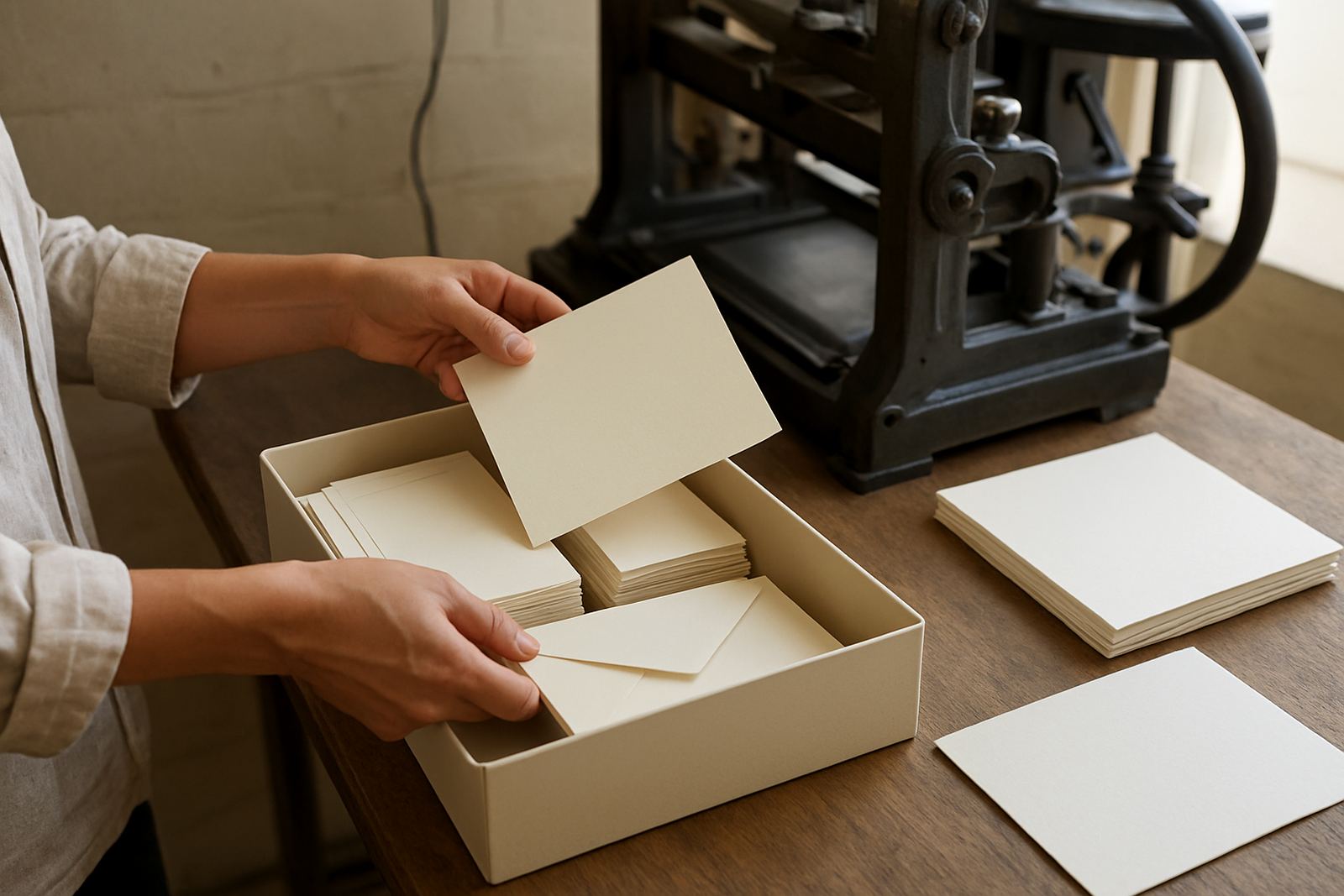
Keep printed pieces flat as soon as they arrive. A spare shelf in a cupboard, a clean plastic container with a tight lid, or a sturdy folder works well as long as the space is dry and away from direct sunlight. In Cape Town, coastal humidity can curl paper faster than most people expect, especially near open windows or bathrooms.
If you are holding items for a wedding or event, avoid stacking heavy objects on top of the suites. Foil, embossing and textured papers can pick up marks if they are pressed for too long. A little space between packs helps the pieces breathe and stay square.
- Keep stationery away from heaters, dishwashers and steamy kitchens.
- Store packs flat, not upright, to reduce edge bending.
- Leave items in their protective wrap until you are ready to assemble.
- For long storage, use acid-free tissue between layers where possible.
Handle Foil and Letterpress Pieces by the Edges
Luxury paper can show fingerprints, especially on dark stocks, soft-touch finishes and metallic foil. When handling suites, hold them by the edges and work with clean, dry hands. If you are assembling invitations or table stationery at home, clear a clean surface first and keep food, drinks and lotions out of the area.
For foil-stamped pieces, avoid rubbing the surface with cloths or tissues. A gentle touch is enough. If a card slips on to the floor or picks up a light mark, do not wipe hard. Use a soft, clean brush or ask for advice before trying anything more. A small scuff can become a bigger problem if it is polished too much.
- Wash and dry hands before opening packs.
- Hold cards at the sides, not across the printed face.
- Work on a lint-free cloth or clean table covering.
- Keep pets and curious little fingers away during assembly.
Protect Invitations During Assembly and Mailing
When invitations are being assembled, place each item in the same order every time. This helps prevent corner damage and keeps envelopes, inserts and RSVP cards neat. If you are using wax seals, ribbon or belly bands, assemble one suite fully before starting the next so you can check alignment and spacing. It saves time, and the finished stack looks much better.
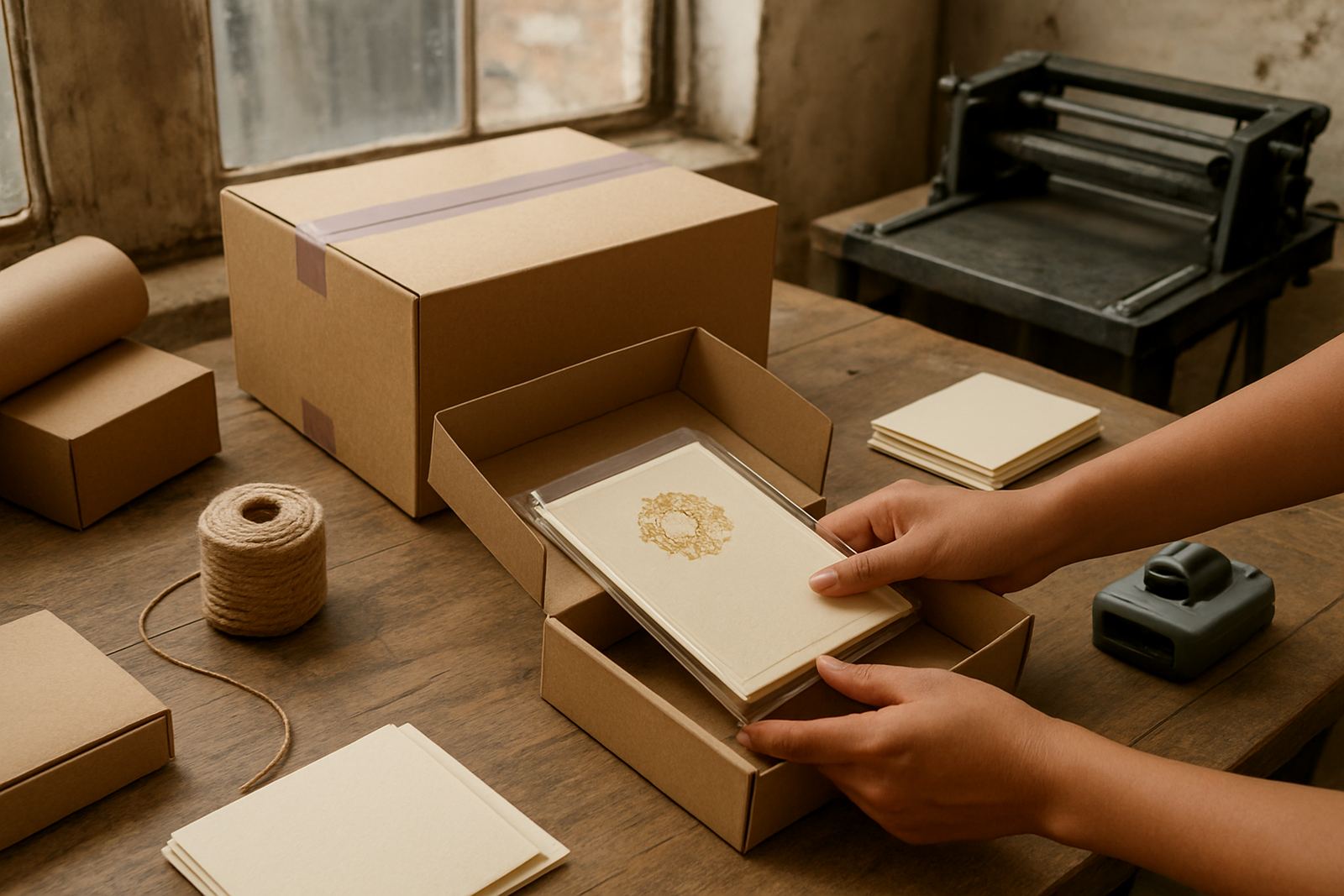
For postable stationery, choose packaging that supports the weight and shape of the suite. A firm envelope and a protective outer mailer are often worth the extra Rand. If the invitation includes foil, thick board or layered inserts, do not force it into a too-small envelope. Bending at the corners can leave permanent creases.
- Check that every insert is dry before packing.
- Use the correct envelope size for thick or layered suites.
- Seal with care so adhesive does not catch the printed face.
- Keep a final count before courier collection or hand delivery.
Look After Stationery in Load-Shedding and Warm Weather
South African conditions matter. During load-shedding, rooms can become warmer and more humid if windows are closed for long periods. Paper stored near appliances or in the sun can warp, and certain adhesives may soften. If you are keeping stationery at home for a few days, choose the coolest room available and avoid placing packs in vehicles for long stretches.
On very hot days, especially inland or in still summer weather, leave courier parcels indoors until the last possible moment. If an event is in Stellenbosch, Paarl or Somerset West, a venue storeroom may be fine for short-term holding but check that it is not damp or near open catering areas. A little planning now can prevent curled corners later.
Where possible, keep a simple checklist of what is stored where. It makes it easier to track invitations, menus, place cards and thank-you notes if everything is split between home and the venue. That way nothing gets misplaced at the last minute.
Clean Minor Marks the Right Way
Not every mark means a piece is ruined. A speck of dust, a light pencil line or a tiny scuff can sometimes be managed carefully. Start with the gentlest method first. Use a clean, dry, soft brush to remove dust, or a clean eraser only on areas without foil or special coating. Never use water, cleaners or sprays unless you have been told they are safe for that paper type.
If a sheet has been dented, creased or marked by moisture, do not try to flatten it under a heavy object straight away. That often makes the damage worse. Keep the piece separate and contact us through the enquiry form on the contact page so we can advise on the best next step.
- Test any cleaning method on a spare piece first if available.
- Avoid sticky tape, which can lift print and leave residue.
- Do not iron paper or use direct heat.
- Separate damaged items from the rest of the suite immediately.
Keep Keepsakes Beautiful After the Event
After the wedding or event, many clients like to keep a set for memory boxes, photo albums or framing. Store keepsakes flat and out of direct light, because bright sunlight can fade colour over time. If you plan to frame a suite, ask for a mount that does not press directly on the foil or embossed sections.
For invitations with envelopes, wax seals or hand-addressed details, keep the full set together in an acid-free folder or archival box. Add a note with the event date and venue so the pieces are easy to identify later. It sounds simple, but those details matter when you look back years later. A well kept suite can stay beautiful for a long time if it is handled with care.
Our Woodstock studio also helps clients across Cape Town and nationwide with finishing, packaging and delivery, so if you are unsure how to store a specific paper type just send an enquiry and we will guide you step by step.