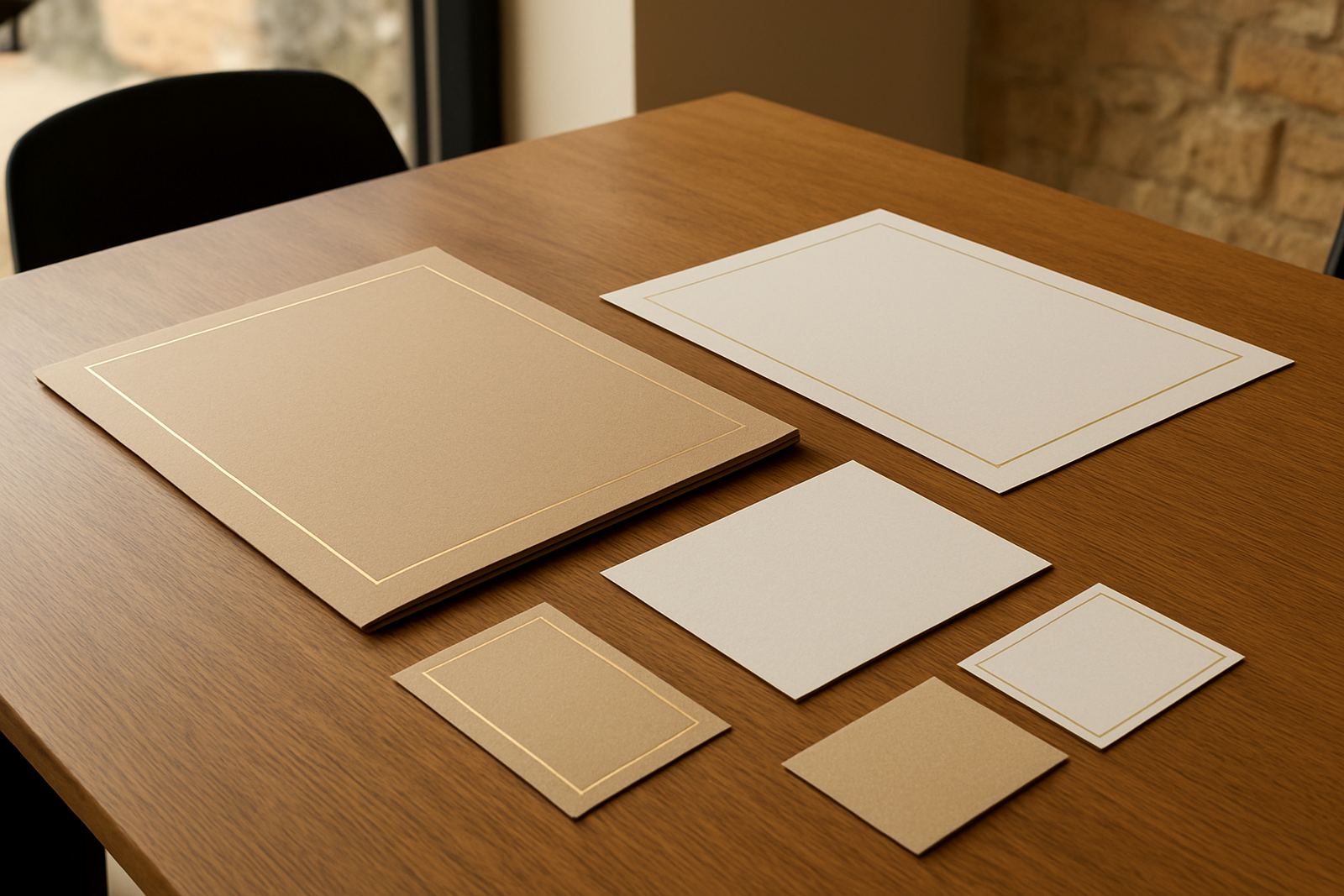
Start with the job your stationery must do
Before choosing paper or foil colour, decide what each item must achieve. A business card may need to introduce you at a meeting in Woodstock, while a letterhead may need to carry quotes, invoices or formal correspondence that feels polished and easy to file. Premium client stationery can also support product launches, wedding and event enquiries, or hand delivered packs for corporate gifts.
Keep the brief practical. Think about who will handle the stationery, how often it will be used, and whether it must travel by courier in summer heat or sit in storage through humid coastal months. If you need a set that looks consistent across cards, letterheads and envelopes, start with one clear visual direction and build from there.
A useful brief should answer these points: what the stationery is for, who will receive it, how many pieces you need, and whether you want extra finishing such as envelope addressing, wax seals or suite assembly. That keeps the project tidy and helps avoid reprints later.
Choose paper that suits South African use conditions
Paper choice affects both the look and the handling of foil. Heavier stock feels more formal, while a lighter sheet can suit letterheads that are posted often or printed on office equipment. For business cards, many clients prefer a firm board that does not bend in a wallet or handbag. If your stationery travels nationwide, choose paper that holds up well in transit and does not mark easily.
In Cape Town, coastal humidity can affect paper that is stored badly, so keep finished stock in a dry room and flat boxes. In some offices, load-shedding means printers sit unused for hours, which makes it worth testing whether your letterhead stock feeds cleanly after storage. If you are mailing to clients in Gauteng or the coast, ask for samples before committing to a full run.
- Pick a stock that suits writing, stamping or printing without feathering.
- Check that the thickness works for folders, envelopes and courier packs.
- Confirm whether the finish is smooth, textured or soft touch before artwork is finalised.
- Keep a small sample set for future reorders and colour checks.
Plan foil colours that match your brand
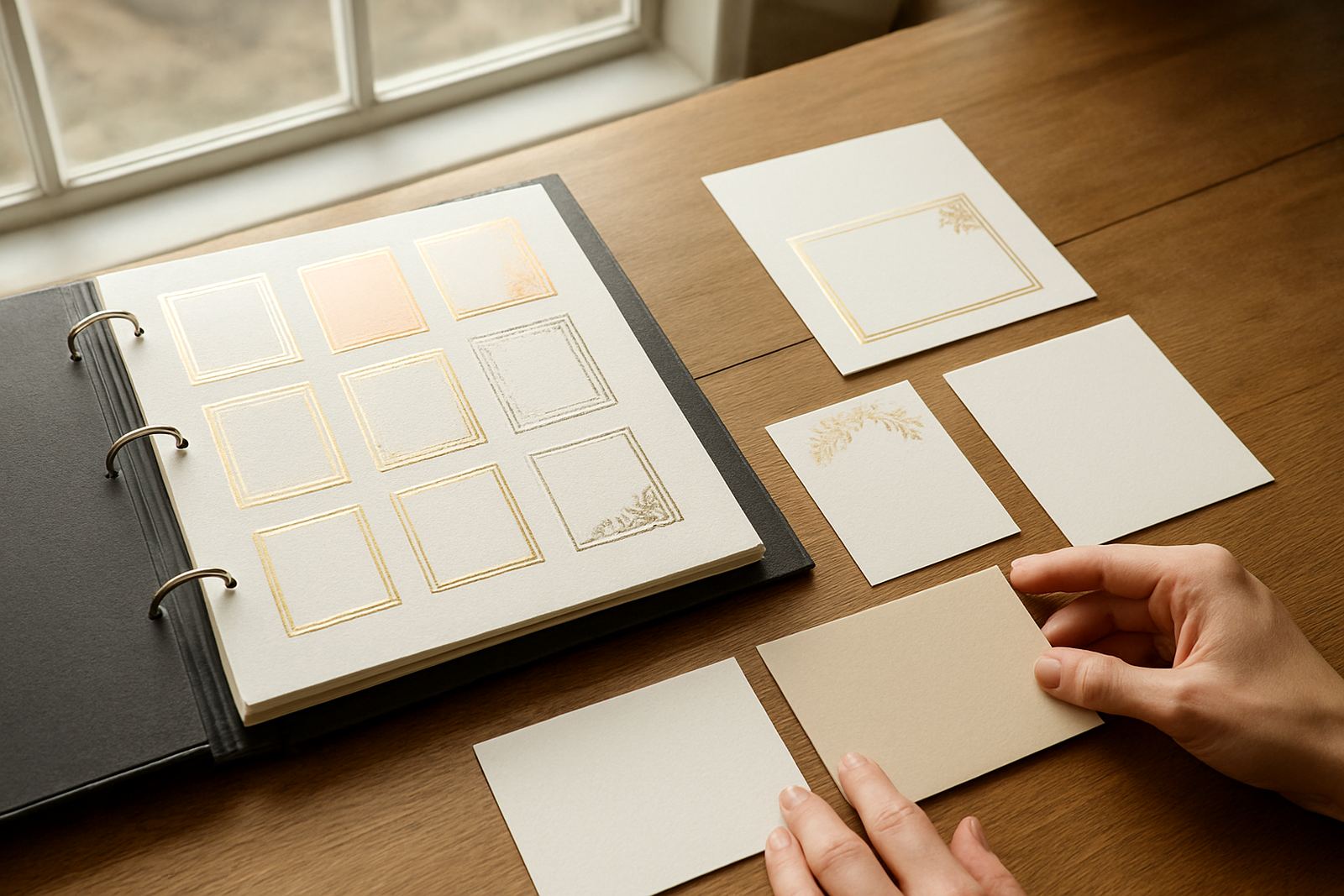
Foil is strongest when it supports the brand rather than competing with it. Gold can feel formal and warm, silver can read clean and cool, and rose tones may suit softer event stationery. Deep black or navy cards can make foil stand out, but lighter papers can work just as well if the artwork has enough contrast. The key is choosing a foil colour that looks consistent on every item, not only on one hero piece.
Colour matching is especially important when a business already uses specific tones for logos, borders or envelopes. Ask for artwork proofing before production so you can check line weight, spacing and how the foil sits against the paper. Small changes in layout can make a large difference to legibility, especially on thin fonts or detailed monograms. It is better to adjust the artwork once than recieve a box of cards that feel crowded.
If you want several stationery items to match, keep the palette tight. One foil colour, one or two paper shades, and one clear set of fonts usually works well for business cards, letterheads and client packs.
Set up a business card that looks premium and stays practical
A foil business card should still be easy to read and simple to carry. Start with the essentials: name, title, phone, message, website and any registration details you need to include. Then decide where the foil should sit. Some businesses use foil on the logo only, while others use it for a border, initials or a small detail on the reverse. Leaving enough quiet space makes the card feel more expensive and keeps the information clear.
For South African networking, a good card needs to be neat, durable and easy to hand over at a meeting, expo or site visit. If your team travels between Cape Town, Stellenbosch, Paarl and Somerset West, it helps to keep the same template across the whole business so every card looks consistent. That also makes reordering simpler when staff details change.
- Use one main font family and keep sizes readable at arm’s length.
- Leave space around the logo so the foil presses cleanly.
- Check that all contact details are current before proof approval.
- Decide whether the back of the card should stay blank, carry a tagline or show a second language line.
Prepare letterheads for quotes, invoices and formal correspondence
Letterheads do more than carry a logo. They help quotes, proposals and letters look organised and credible when they arrive on a client’s table. A good letterhead keeps the top section light enough for writing or printing, while still allowing enough brand detail to be recognised immediately. If the paper will be printed on in office equipment, ask for a test first so the sheet feeds properly and the ink sits well.
Many businesses need more than one version. You may want a standard letterhead for everyday use and a more formal version for presentations or signed documents. If you print in house, also make sure your file is set up with the correct margins, because foil borders or heavy artwork too close to the edge can cause problems. For frequent users, it is worth keeping extra stock boxed and labelled by version.
Useful checks before printing include: whether the address is current, whether the footer has the right legal details, and whether the design leaves enough room for handwritten notes or stamps. These small details help the stationery work in real life, not only in a sample file.
Build a premium client pack that feels complete
Premium stationery often works best as a set. A client pack may include a foil business card, letterhead, envelope addressing, inserts, gift packaging and a note card. For weddings and event clients, the same approach can be used across invitations, RSVP cards, place cards and day-of stationery so the look stays consistent from first enquiry to the event table. Wax seal finishing can add a final touch, but it should still be handled with care so envelopes remain closed and neat in transit.
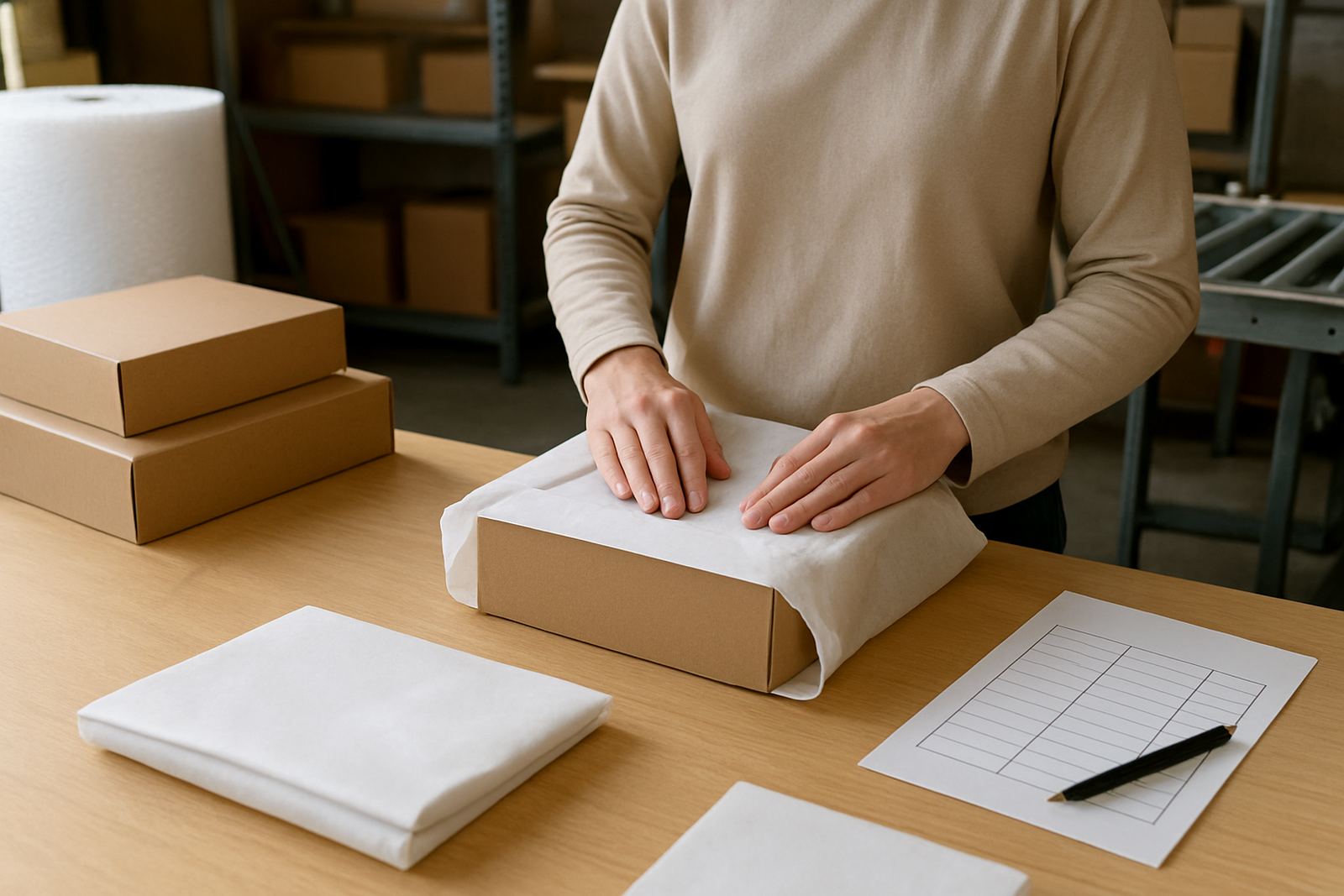
When ordering a set, think through the sequence. First approve the design, then confirm paper, foil and envelope sizes, then check how many pieces need assembly. If the pack is being couriered nationwide, good packing matters too. Flat items should be protected from bending, and delicate finishing should be packed so corners and seals do not rub during delivery. In humid areas, avoid storing assembled packs for too long before dispatch.
- Approve a full sample before the main run.
- Confirm quantities for each insert, card and envelope.
- Group items by client or event if multiple packs are going out at once.
- Check courier timing against your launch, meeting or event date.
A simple ordering checklist for your next run
A good stationery order moves faster when the details are final from the start. Send a clear brief, a current logo file, the wording for each item and any sizes you already use. If you need paper sourcing, ask for options that suit your budget and turnaround. If you are based in Woodstock or nearby areas such as the Southern Suburbs or Atlantic Seaboard, a local studio can often help with the finer finishing and collection timing, while couriered delivery works well for clients further afield.
Before final approval, check these points one last time: spelling of names, titles and addresses, correct dates, foil colour, paper choice, quantity per item and delivery details. A final proof is worth the time because it avoids waste and keeps the project on budget. With the right planning, foil stationery can be both practical and special, whether it is for a first meeting or a major client send-out.
If you are ordering for a team, keep a record of what was approved so future reprints stay consistent. That makes it easier to add staff, change contact details or repeat a successful design later on without starting from scratch.