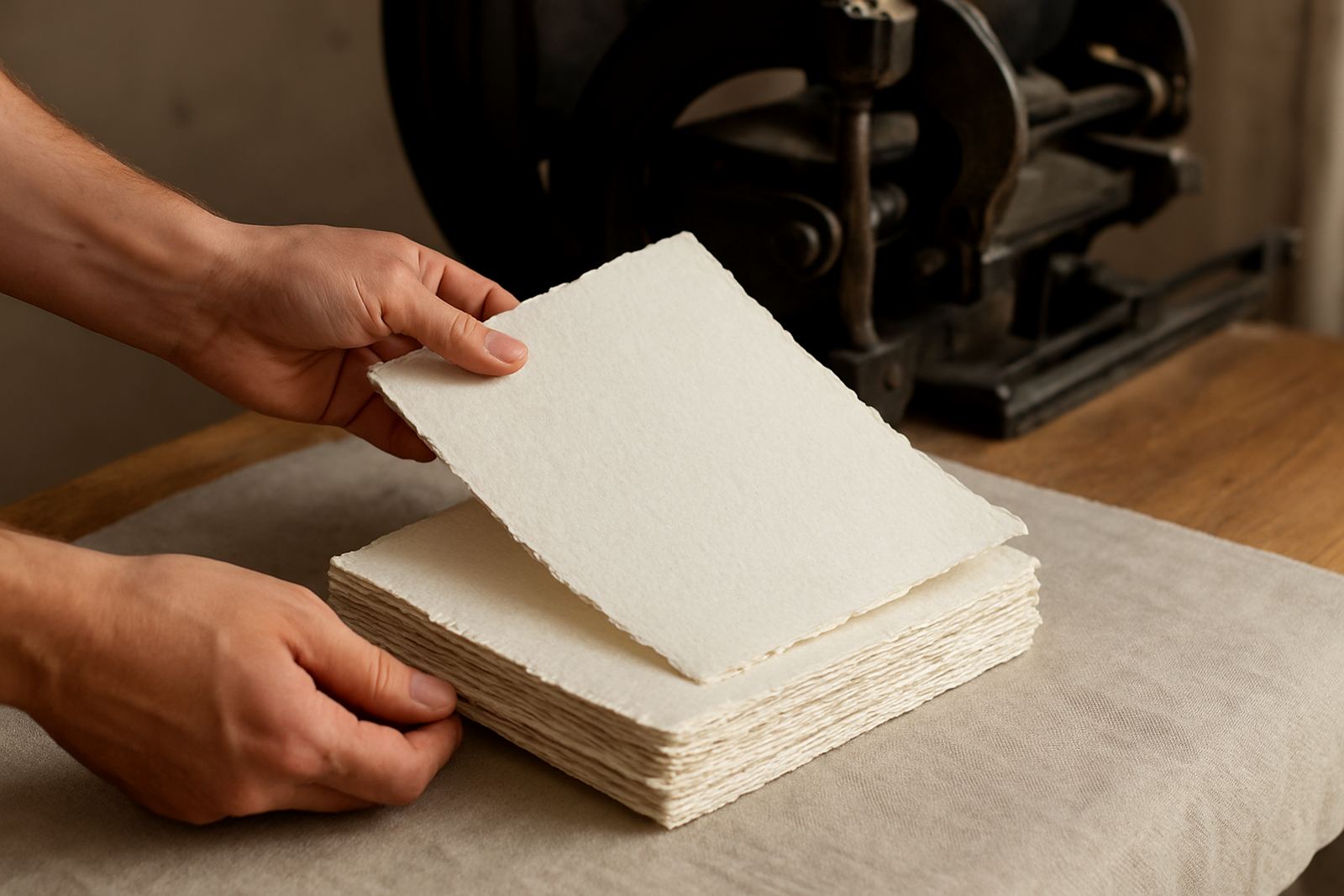
Why Cotton Paper Feels So Special
Cotton paper is made with cotton fibres rather than only wood pulp, which is one reason it has a softer touch and a more premium feel. When a guest opens an invitation on cotton stock, the first impression is not only visual. It is tactile. The paper has a gentle texture, a natural body and enough thickness to feel considered without becoming bulky.
That matters for luxury invitation suites because the paper becomes part of the message. If you are setting the tone for a wedding at a wine estate in Stellenbosch or a smaller function in Cape Town, the stock should support the style of the event. Cotton paper does that well because it feels calm, elegant and quietly expensive, not flashy. It suits formal wording, monograms, fine line artwork and simple layouts very neatly.
- Soft, refined hand feel
- Natural look that suits classic and modern designs
- Good thickness for premium invitation sets
- Works well for keepsake stationery
Why Foil and Letterpress Stand Out on Cotton Stock
Cotton paper is often chosen for foil stamping because the surface gives crisp detail without looking harsh. Metallic foil sits beautifully on a textured cotton sheet, and the contrast feels elegant. Letterpress also benefits from this type of stock because the impression can be felt more clearly, which adds depth to the piece.
For couples who want their invitation suite to feel memorable, this combination is hard to beat. A simple name panel in gold foil on cotton paper can carry more impact than a highly decorated design on a glossy sheet. The material lets the printing method do the work. That is one reason it remains a favourite for luxury wedding stationery in South Africa, especially where clients want a balance of sophistication and restraint.
- Foil looks cleaner and more refined
- Letterpress impression is more noticeable
- Matte finish prevents glare in photographs
- Ideal for monograms, names and event details
A Practical Choice for Cape Town Weather and Handling
Cape Town’s coastal air can be hard on paper if a piece is too flimsy or too smooth. Cotton stock tends to hold itself well during suite assembly, envelope addressing and delivery, which helps reduce curling and marking. It also handles the touch of multiple people better than lighter paper. That is useful when invitations are being packed, sorted and couriered to clients across South Africa.
In our Woodstock studio, we often see clients choosing cotton paper for events in the Southern Suburbs, on the Atlantic Seaboard and even for destination weddings in Paarl and Somerset West. It travels well and presents beautifully on arrival. For households dealing with load-shedding and planning around delivery dates, a dependable stock gives a little more peace of mind because the printed pieces are less fussy to store and handle before the event.
- Holds its shape better in humid coastal conditions
- Less likely to show fingerprints than slick stocks
- Suitable for packing into invitation suites and gift boxes
- Easy to store flat before final assembly
When Cotton Paper Makes the Most Sense
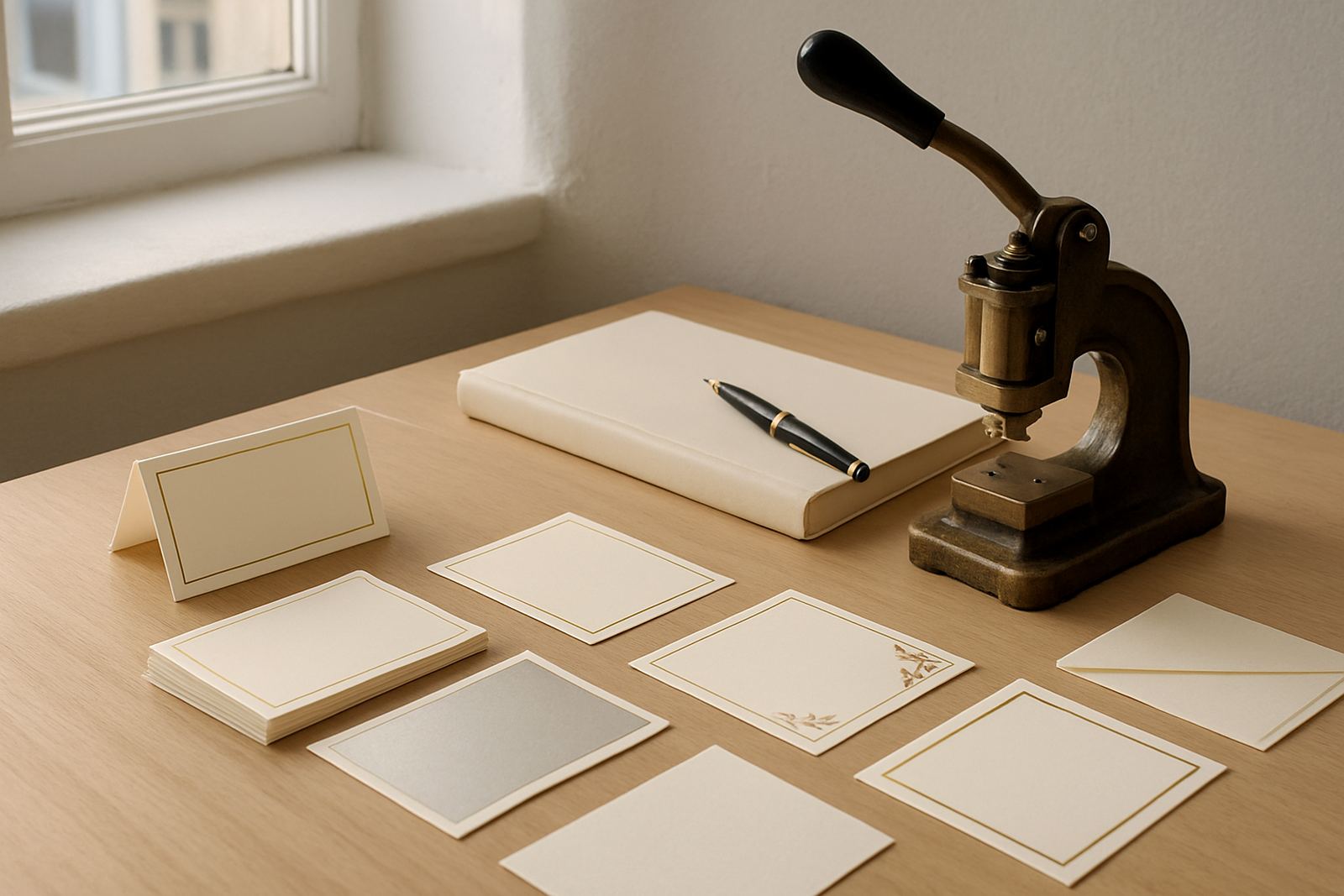
Not every project needs cotton paper, but it is especially strong when the stationery is meant to be kept. Wedding invitations, vow booklets, menu cards, table numbers and thank-you notes all benefit from the paper’s weight and quality. It is also a good option for events where the printed pieces are part of the decor and should look polished on the day.
If your design includes a lot of white space, delicate typography or hand-finished details like wax seals, cotton paper is often the better fit. It gives the whole suite a composed, handcrafted feel. That said, it should still suit the practical side of the brief. We always consider artwork style, print method, courier timing and the number of items in the set before recommending a stock. The right paper should look good and behave well.
- Best for keepsake invitations and formal events
- Strong choice for minimal layouts
- Pairs well with wax seal finishing and envelope addressing
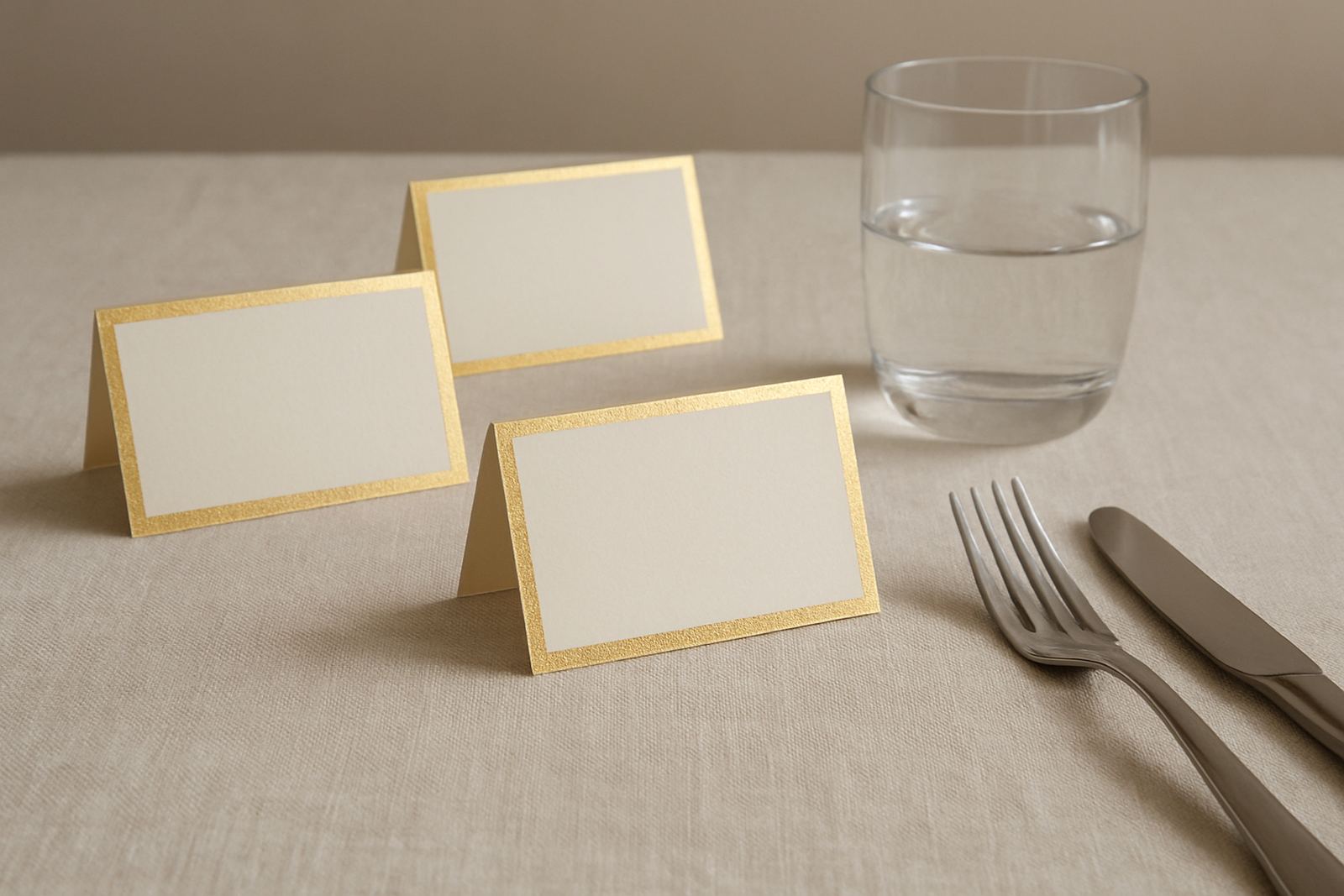
- Useful for menus, place cards and ceremony pieces
How to Choose the Right Cotton Stock for Your Suite
There are different cotton papers, and the best one depends on the finish you want. Some have a smoother face for fine typography, while others have more texture and a softer appearance. Heavier stocks feel more substantial, but they may need careful folding or scoring if your suite includes layered inserts. Lighter cotton papers can be easier for suite assembly but still give that elegant hand feel.
When choosing, look at a few practical factors:
- Paper weight and thickness for the number of inserts you need
- Texture level, especially if the design includes small text
- Compatibility with foil stamping, letterpress finishing and colour matching
- Whether the pieces will be mailed, couriered or handed out in person
- Any special finishing such as envelope addressing or gift packaging
For a Cape Town couple planning a garden wedding in Constantia, for example, a soft ivory cotton paper with gold foil can feel timeless and suit the setting without competing with it. The same stock could also work for a more modern event if the layout is pared back and the typography is clean.
Why Cotton Paper Still Wins for Luxury Invitation Suites
Trends come and go, but cotton paper stays relevant because it is practical, beautiful and dependable. It gives a finished piece presence. It supports careful craftsmanship. And it helps luxury stationery feel special from the first glance to the last touch. For clients who want custom design with a polished result, that matters.
At Foil Stamping Studio in Woodstock, we use cotton paper often because it suits the kind of work our clients ask for across Cape Town, Stellenbosch, Paarl and Somerset West. Whether the suite is being assembled for a formal wedding or a private celebration, the stock helps the details hold together. That is what makes a good invitation memorable. Not excess, just the right material chosen with care.