
Why an envelope liner changes the first impression
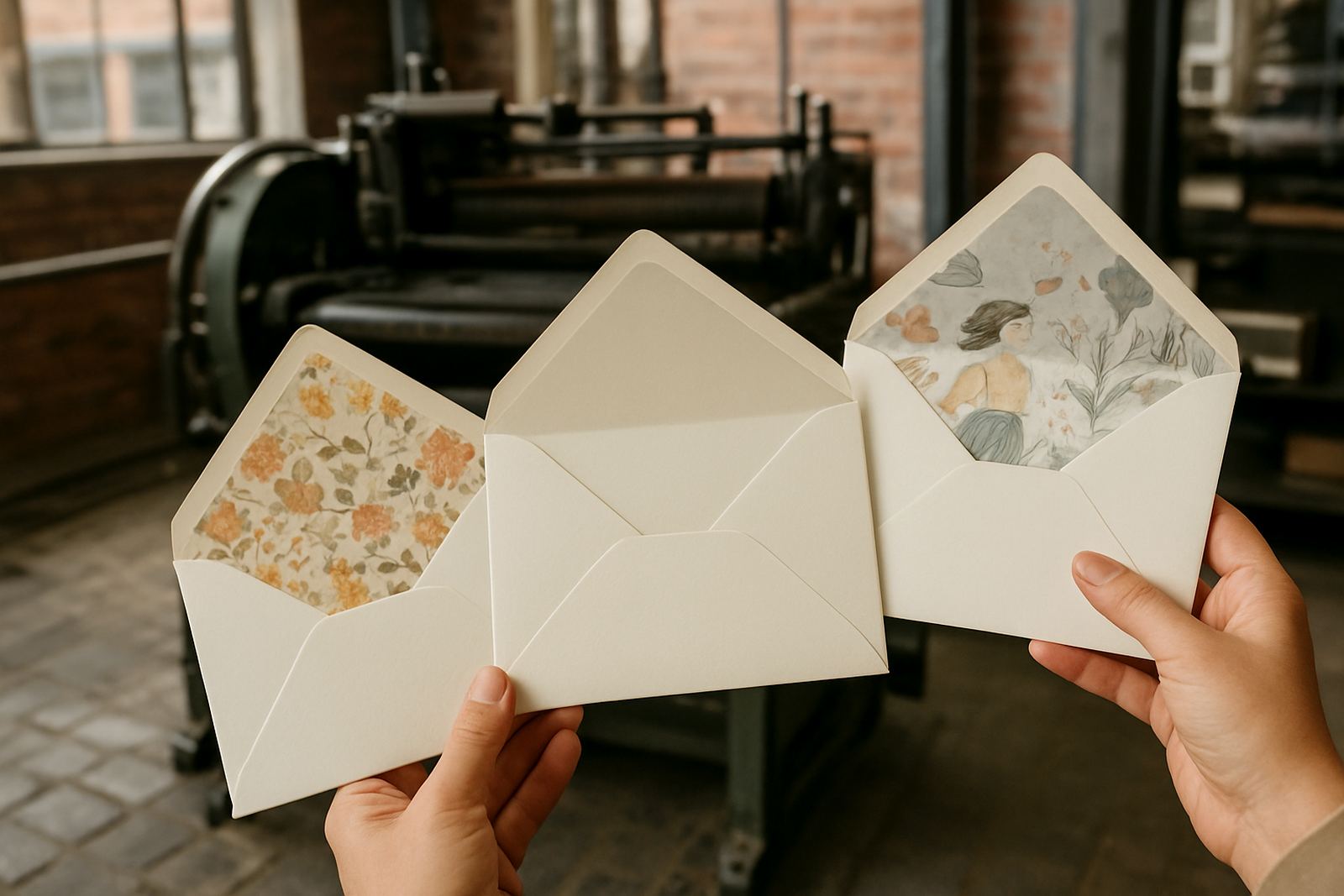
An envelope liner works because it gives people a reveal before they reach the invitation. That small moment matters, especially for weddings, milestone birthdays and corporate events where the stationery should feel considered from the first touch.
In practice, a liner can soften a plain outer envelope, tie together your colour palette, or carry a motif that appears again in the invitation, menu and seating plan. For Cape Town couples and hosts, it is also a smart way to bring in local detail, such as a floral sketch, a coastline pattern or a subtle nod to the venue. It does not need to shout. In fact, the best liners are often the ones that feel like a pleasant surprise, not a hard sell.
At our Woodstock studio, we often see clients choose a restrained outer envelope and then use the liner to add character. That keeps the mailing side practical while giving the opening moment a bit of theatre.
Pattern ideas that work well in South African settings
When choosing a pattern, think about the setting, the season and the mood you want to create. A busy print can be beautiful, but it must still suit the rest of the suite. If the invitation already has foil, textured stock or strong typography, the liner should support it rather than compete with it.
- Botanical linework for garden venues, wine farms and outdoor ceremonies
- Coastal motifs for Atlantic Seaboard events, with shells, waves or soft blue tones
- Geometric repeats for modern city celebrations in Woodstock or the CBD
- Monograms and initials for a classic, formal feel
- Soft floral washes for romantic weddings, baby showers and spring functions
A local example: a Paarl wedding with warm neutrals and brass accents might suit a cream envelope with a liner printed in faded olive leaves. A Stellenbosch event with burgundy and gold could take a deeper, moodier pattern. The trick is balance, not matching every item exactly.
Textures and papers that lift the liner beyond print
Not every liner has to rely on pattern alone. Texture can do a lot of the work, especially when the outer envelope is plain. A lightly textured paper can make the opening feel richer even before any ink or foil is seen.
We often guide clients toward papers that fold neatly, sit well inside the envelope and do not bulk out the suite too much. This matters if you are posting across South Africa, because a bulky insert can affect packing and courier charges. It also matters in summer, when coastal humidity can make some papers curl if they are not stored properly.
Good texture choices include:
- Laid or linen-style paper for a traditional, tactile finish
- Smooth matte stock for clean artwork and crisp colour
- Vellum accents used as a partial liner for a softer reveal
- Textured paper with a subtle grain for warm, understated depth
If you are using envelopes for a Cape Town event in warmer months, keep the finished suites boxed and flat until dispatch. That helps preserve the shape and keeps the corners neat. It sounds simple, but it makes a real difference.
Matching liners to foil, print and envelope colour
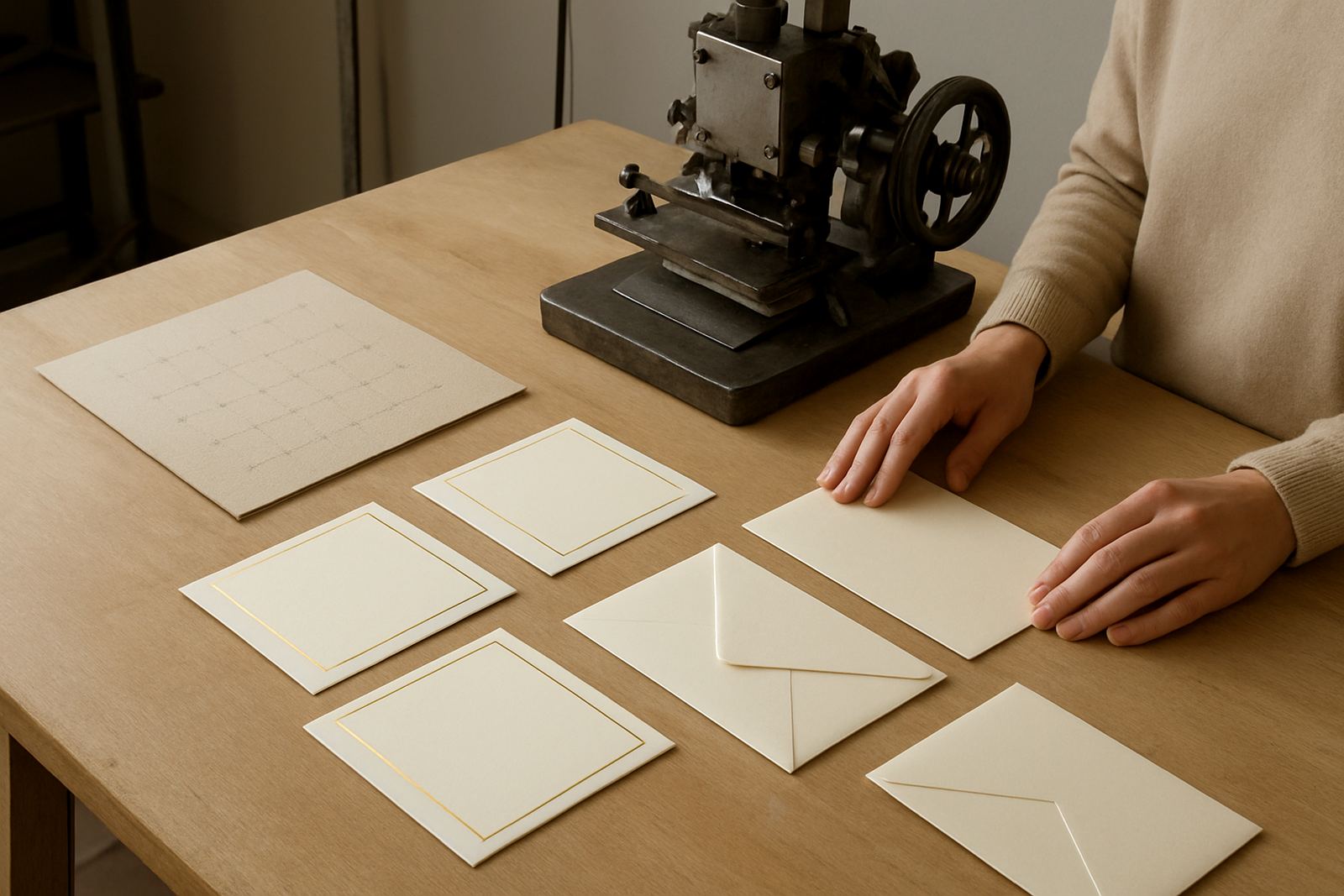
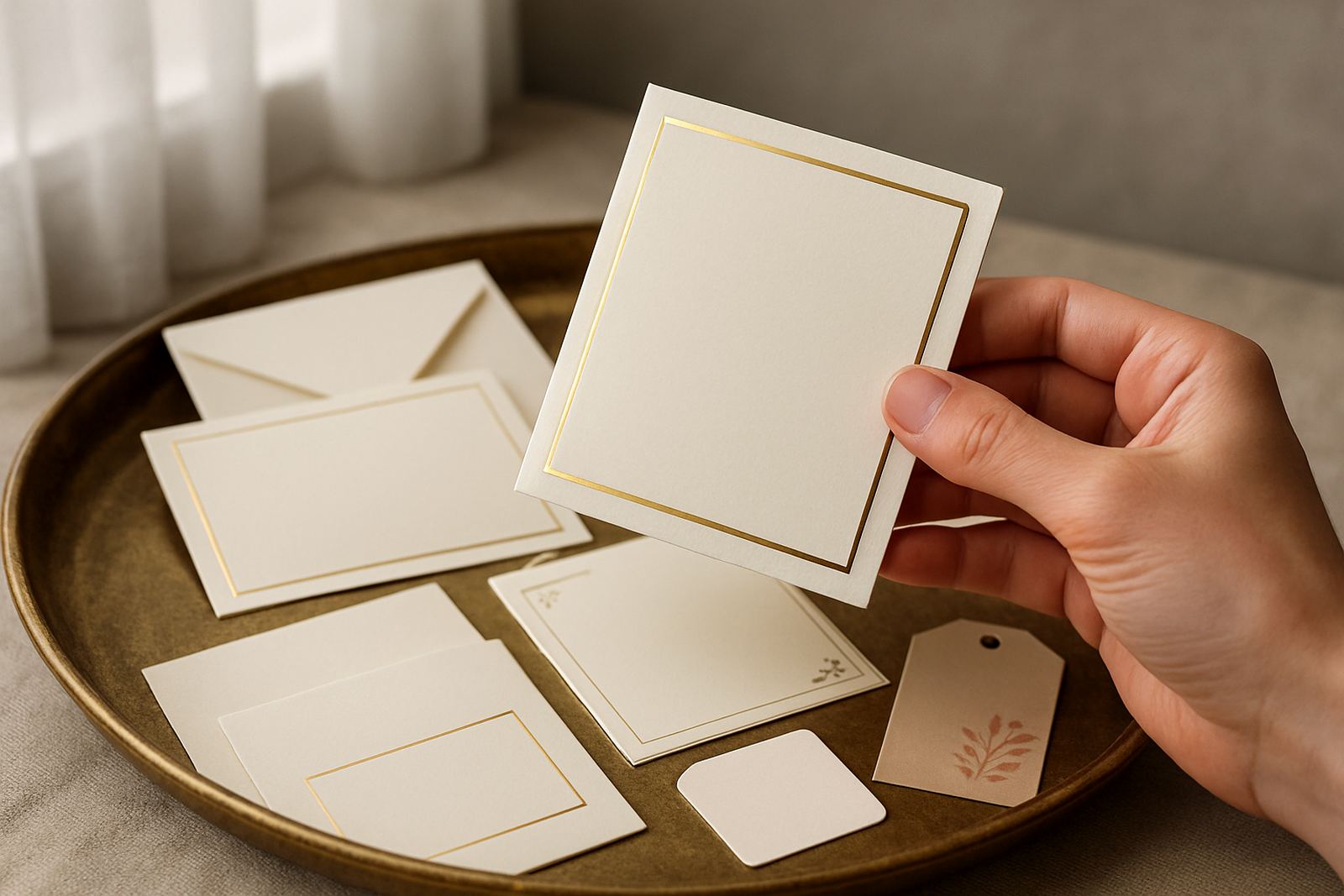
The best liners are usually planned alongside the rest of the suite, not added at the end. If your invitation includes foil stamping, the liner can repeat that metal tone in a quieter way through artwork, border lines or just the overall colour family.
Dark envelopes suit liners with lighter artwork, while pale envelopes can carry stronger artwork inside. If you are using coloured envelopes, be careful with paper weight and finish so the liner does not show through from the outside. That can happen on thinner stock, especially with very pale inks or high contrast patterns.
Useful combinations include:
- White envelope with navy, sage or blush liner
- Deep green envelope with ivory liner and fine gold accents
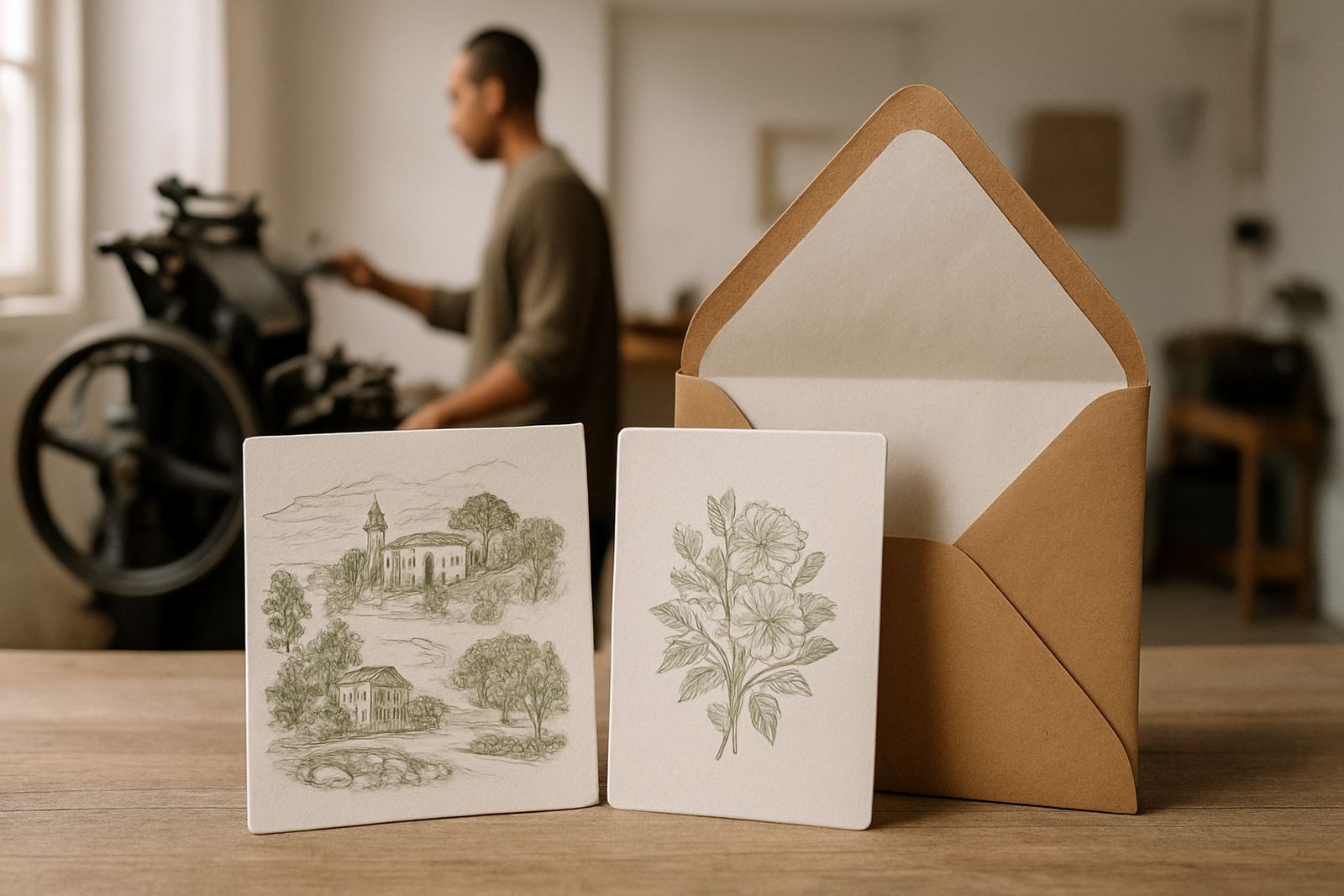
- Kraft envelope with botanical sketch art and black text
- Soft grey envelope with silver, pearl or muted blue details
For event stationery, we also look at whether the liner needs to coordinate with menus, place cards, gift packaging or a welcome sign. When the pieces speak the same visual language, the full suite feels more complete without being fussy.
Practical choices for mailing, assembly and nationwide couriering
Envelope liners have to look good and still travel well. If invitations are being couriered to Johannesburg, Durban, Bloemfontein or smaller towns nationwide, the liner needs to stay flat, clean and securely fixed inside the envelope.
That means considering the adhesive, the envelope size and the order of assembly. For heavier suites, we often recommend test packing before final production so the client can feel how the envelope closes. If the closure is too tight, the suite can arrive marked or bent.
- Check the final thickness before sealing the envelopes
- Keep liners slightly smaller than the envelope flap area
- Use good paper stock so the liner does not wrinkle when inserted
- Allow enough time for assembly, proofing and rechecking counts
- Store finished suites in a dry, cool place before dispatch
In our Woodstock base, this step is especially important during busy wedding season. A well planned liner should make life easier, not turn into an added problem when the courier arrives.
How to brief your designer so the liner feels personal
If you want the liner to feel like part of your story, give clear direction from the start. Share the venue, flowers, dress code, colours and any family detail you would like reflected. A simple reference photo can help, but so can a short note about the mood you want: formal, relaxed, romantic or modern.
It also helps to decide where the liner sits in the hierarchy of the suite. Should it be the feature, or simply a quiet background element? Once that is clear, the design process becomes much easier and the result is more coherent. We often find that clients from the Southern Suburbs and Atlantic Seaboard prefer understated liner work, while Paarl and Stellenbosch clients may lean toward richer pattern and stronger colour.
A good brief saves time and reduces unnecessary revisions. It also gives the finishing team a better chance to keep the final product consistent across the full order, which matters when every envelope is being handled one by one.
When done properly, an envelope liner is not just decoration. It is the first sign that someone has thought carefully about the guest experience, right from the moment the flap is lifted.