
When to send save the date cards in South Africa
For a local wedding in South Africa, the sweet spot is usually 6 to 8 months before the date. That gives guests time to block off the day without sending information too early, before your venue, menu or ceremony time is fully confirmed. For a wedding in peak season, especially December, or one that falls near a long weekend, send them even earlier if you can.
If you are inviting guests from other provinces, or many people are travelling to Cape Town, Joburg or Durban, 8 to 12 months is safer. People need time to sort flights, accommodation and leave approvals, and families often coordinate school calendars as well. A simple card with names, wedding date and city is enough at this stage.
For a smaller celebration with mostly local guests, you can work on the shorter end of the scale. But if your guest list includes family in different towns, do not leave it too late. A saved date is not a full invitation, it is a practical heads-up.
Use the season and travel distance to guide your timing
South African wedding timing is shaped by weather, school holidays and road travel. December and early January are busy for almost everyone, while April and September can also get crowded with breaks and public holidays. If your date lands in one of those periods, let guests know as soon as the booking is settled.
Destination weddings need a longer lead time than city weddings. A wedding in Stellenbosch, Paarl or Somerset West may sound close for Cape Town guests, but for family flying in from Gqeberha, Polokwane or Kimberley it still means planning. Even local roads matter, because guests will check traffic, parking and whether the venue has enough space for a late afternoon arrival.
- Local Cape Town wedding: send 6 to 8 months ahead
- Out of town guests or peak season: send 8 to 10 months ahead
- Destination wedding or major travel: send 10 to 12 months ahead
- Very small, informal gathering: 4 to 6 months may be enough
What to include on the card, and what to leave out
A save the date should stay simple. The aim is to reserve the date, not to answer every question. Keep the wording short and clear, then save the finer detail for the invitation later. Guests only need enough to mark the day and start planning.
Include the couple’s names, the wedding date, the town or city and a note that a formal invitation will follow. If you already know it is a travel heavy event, you can add a line that says accommodation details will follow. That is usually enough, and it avoids confusion if suppliers or venues are still being finalised.
- Names of the couple
- Wedding date
- Town or city
- Short note that a full invitation will follow
- Travel hint if guests may need flights or overnight stays
Leave out registry details, meal choices and RSVP instructions at this stage. Guests do not need to respond yet. A neat save the date is about timing, not admin.
Why print quality matters when the notice goes out early
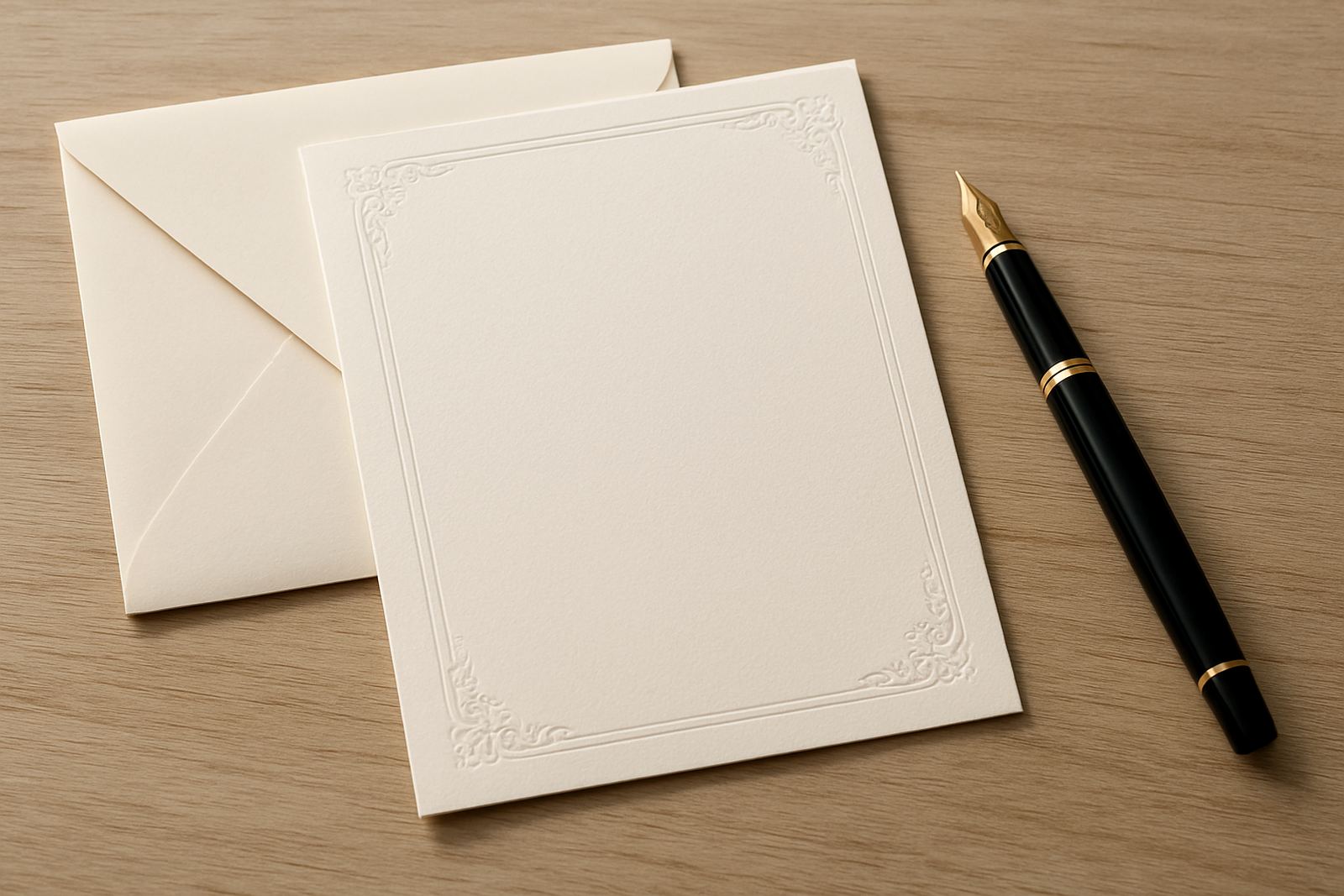
When a card is sent many months before the wedding, it must still look good on a fridge, pinboard or office notice board. That means the stock should be strong enough to handle handling, posting and storage. Heavier paper also takes foil stamping and letterpress finishing well, which is useful if you want the piece to feel special from the start.
In Cape Town, humidity near the coast and load-shedding related rushes can affect how stationery is stored and assembled. Proper paper sourcing, accurate artwork proofing and careful finishing help keep the card crisp. If you are using envelopes, make sure the addressing is clear and the glue seals properly, especially for couriered stationery moving nationwide.
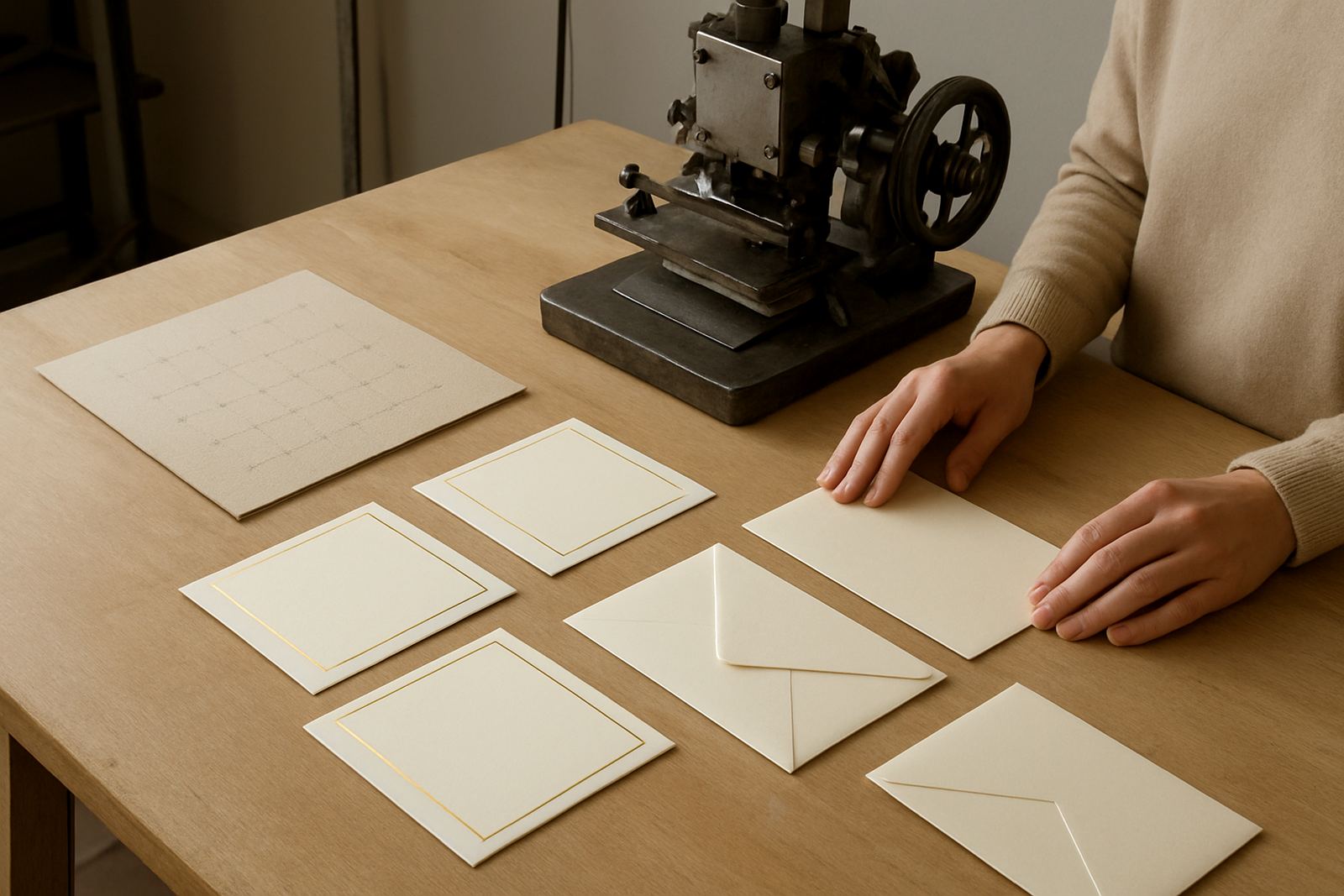
Foil details work well for save the date cards because they catch the eye without needing a full invitation suite. A small touch of gold, copper or silver can be enough. It is a first impression, so the printing must be neat, the cut must be clean and the layout should read easily at a glance.
How to plan around proofing, assembly and courier time
Even a simple save the date still needs production time. If you want custom design, colour matching, envelope addressing or gift packaging, build in enough time for proofing and approval. It is common to underestimate how long this takes, especially when guests are spread across South Africa and cards need to go out in batches.
A practical workflow is to allow time for design, then proofing, then print and finishing, then envelope assembly and courier coordination. If you are sending to multiple regions, it helps to split the mailing list early so no one is left waiting. A few extra days also gives room for corrections, which always happens at least once.
- Allow 1 to 2 weeks for design and artwork proofing
- Allow 1 to 2 weeks for print and finishing
- Allow extra time for envelope addressing and assembly
- Allow courier time for Johannesburg, Durban and other out of province addresses
This timeline is especially useful if your wedding falls over a busy period. A little planning now saves stress later, and it means your cards reach people before their calendars fill up.
A Cape Town example that shows the timing in real life
Say a couple is getting married in a wine farm venue near Stellenbosch in late March. Their guest list includes friends in Woodstock, family in Johannesburg and cousins in Port Elizabeth. For that mix, the save the date should go out about 9 months before the wedding. That gives local guests room to arrange childcare and travel plans, while out of province guests can book flights before prices rise.
If the couple waits until 3 or 4 months before the wedding, they may still send the invitations on time, but some guests will already have booked other trips. This is where the save the date earns its keep. It is not about formality for the sake of it, it is about giving people a fair chance to be there.
For couples in Cape Town’s Southern Suburbs, Atlantic Seaboard or Northern Suburbs, the same logic applies. Even when travel is short, people still need notice if the wedding falls during school holidays, a public holiday weekend or a busy end of year stretch.
The simplest rule: send early enough to be useful
If you are unsure, err on the side of earlier rather than later. Guests can always wait for the formal invitation for the exact details, but they cannot plan around a date they never received. A save the date works best when it arrives while calendars are still open and decisions are still easy.
For South African weddings, that usually means sending local cards 6 to 8 months ahead, and destination or travel heavy cards 8 to 12 months ahead. That gives enough time for leave, accommodation and family planning without making the notice feel too distant. It also gives your stationery enough breathing room for good design, careful finishing and proper delivery.
At Foil Stamping Studio in Woodstock, we see that the best save the date cards are the ones that land at the right moment and look considered from the start. A well timed card does more than inform, it helps guests commit with confidence. Small detail, big difference.