Why Deckled Edges Feel So Romantic
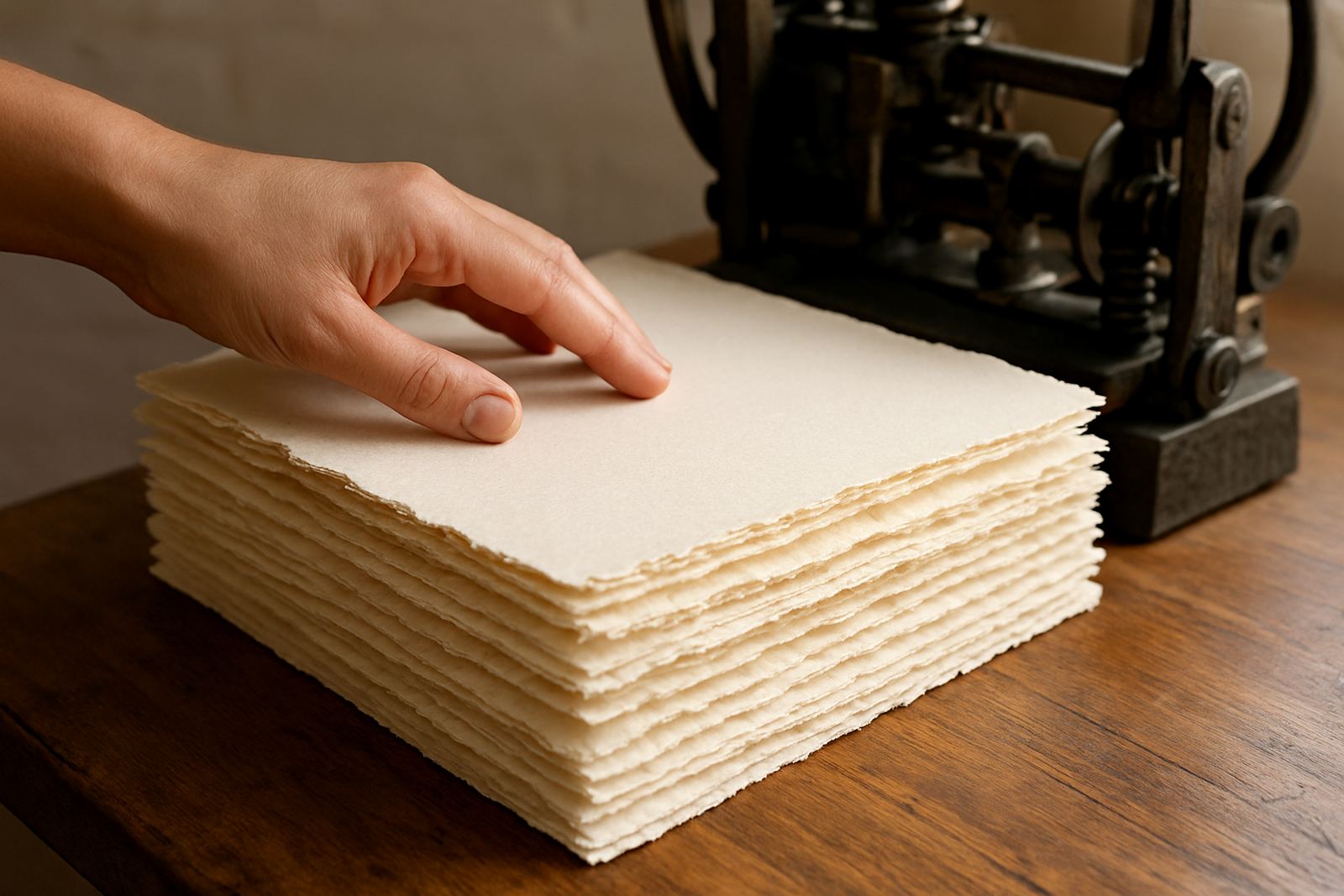
Deckled paper edges are uneven by design, with a feathered border that looks gently torn rather than cut by machine. That little irregularity changes the whole mood of a piece. A card with a straight edge feels formal and precise, while a deckled edge feels softer, more personal and a touch more old-world.
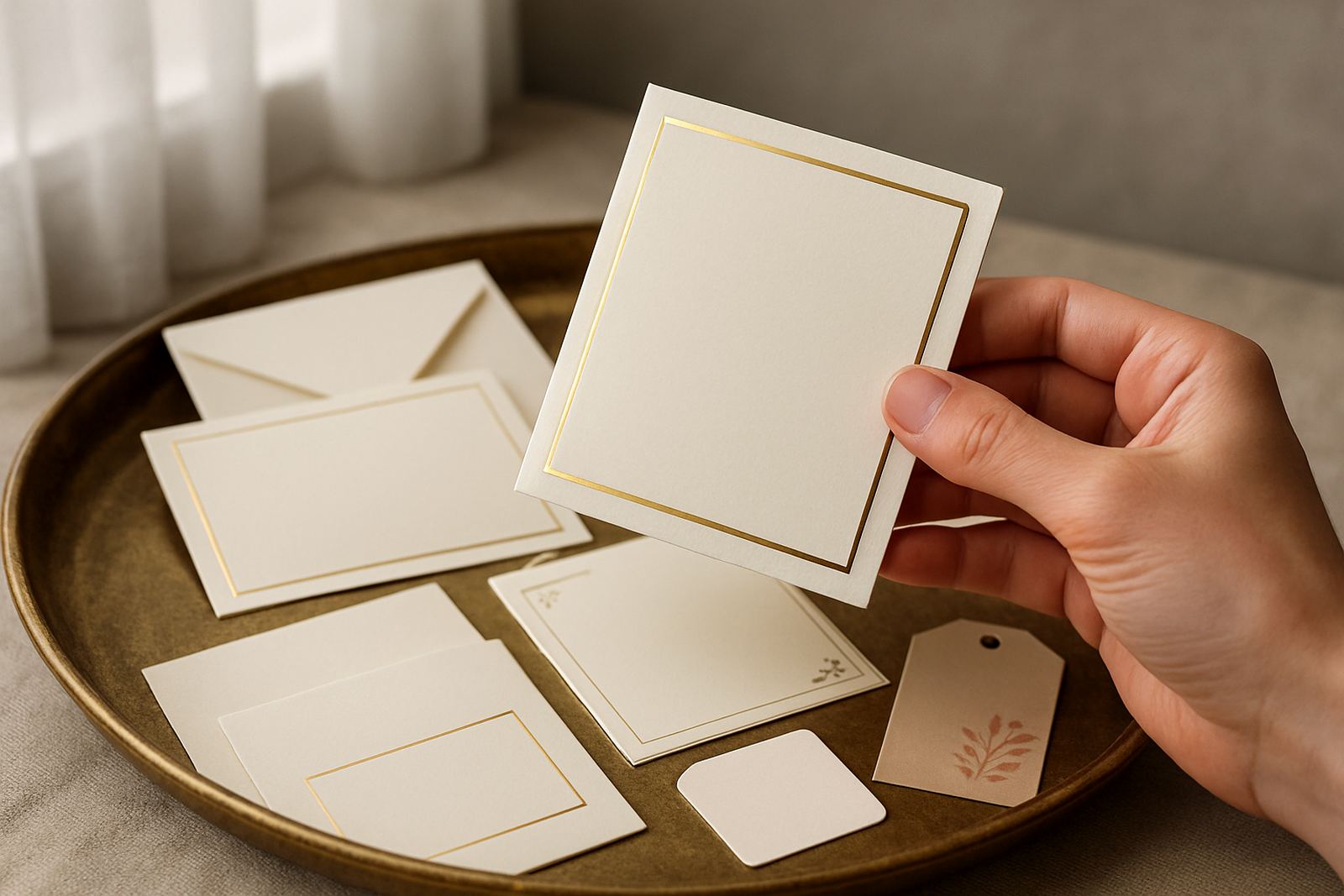
For couples planning stationery, the appeal often comes from the balance between refinement and texture. Foil stamping already brings shine and definition, and deckled edges bring contrast. Together, they create an invitation that feels considered from the first glance. It is especially effective for weddings with garden settings, heritage venues or a warm coastal palette.
At our Woodstock studio, we often see clients choose deckled edges when they want the stationery to feel less corporate and more human. That can suit a classic black tie invitation just as well as a relaxed estate wedding in the Cape winelands.
Where Deckled Edges Work Best in a Stationery Suite
Deckled edges do not have to appear on every item in a set. In fact, they often work best when used with restraint. A single deckled insert inside a crisp outer card can add texture without making the suite look busy. The trick is to let the edge do its job quietly.
- Main invitation cards with foil details and a soft border
- Vow cards or keepsake notes for the ceremony
- Menu cards for reception tables
- Welcome notes for gift boxes or hotel welcome packs
- Hand-tied inserts inside envelope suites
For larger orders, consistency matters. If one piece is heavily textured and the others are not, the suite can look mismatched. A good production plan keeps the paper weight, tone and edge treatment aligned across the order.
Choosing Paper That Suits the Edge
Not every paper takes a deckled finish well. A thick cotton stock or a quality textured board usually gives the best result, because the fibres separate in a controlled way. Very smooth sheets can still work but they need careful handling and proper finishing to avoid a flat or harsh look.
Colour also plays a part. Ivory, soft white and warm neutral shades often suit deckled edges best because they echo the natural character of the paper. Darker stocks can work too, though the edge effect becomes more subtle and the contrast is reduced. If you want foil to stand out clearly, it helps to test the paper tone against the metallic finish before production starts.
In Cape Town coastal humidity can affect paper if it is stored badly, so keep the suite flat and dry once it arrives. This is especially important for weddings in summer, when the wind and moisture can both make paper curl or mark if it is left out too long.
- Ask for a paper sample before approving the final run
- Check the deckled edge against your chosen foil colour
- Store finished stationery in a cool, dry room
- Allow time for proofing if your design includes multiple inserts
Practical Details That Protect the Finish
Deckled edges need a little more care than standard trimmed stationery. They should be cut and handled in a way that protects the fibres and keeps the edge looking intentional rather than damaged. That means planning the order of production properly, especially if the invitation also includes envelope addressing, wax seal finishing or suite assembly.
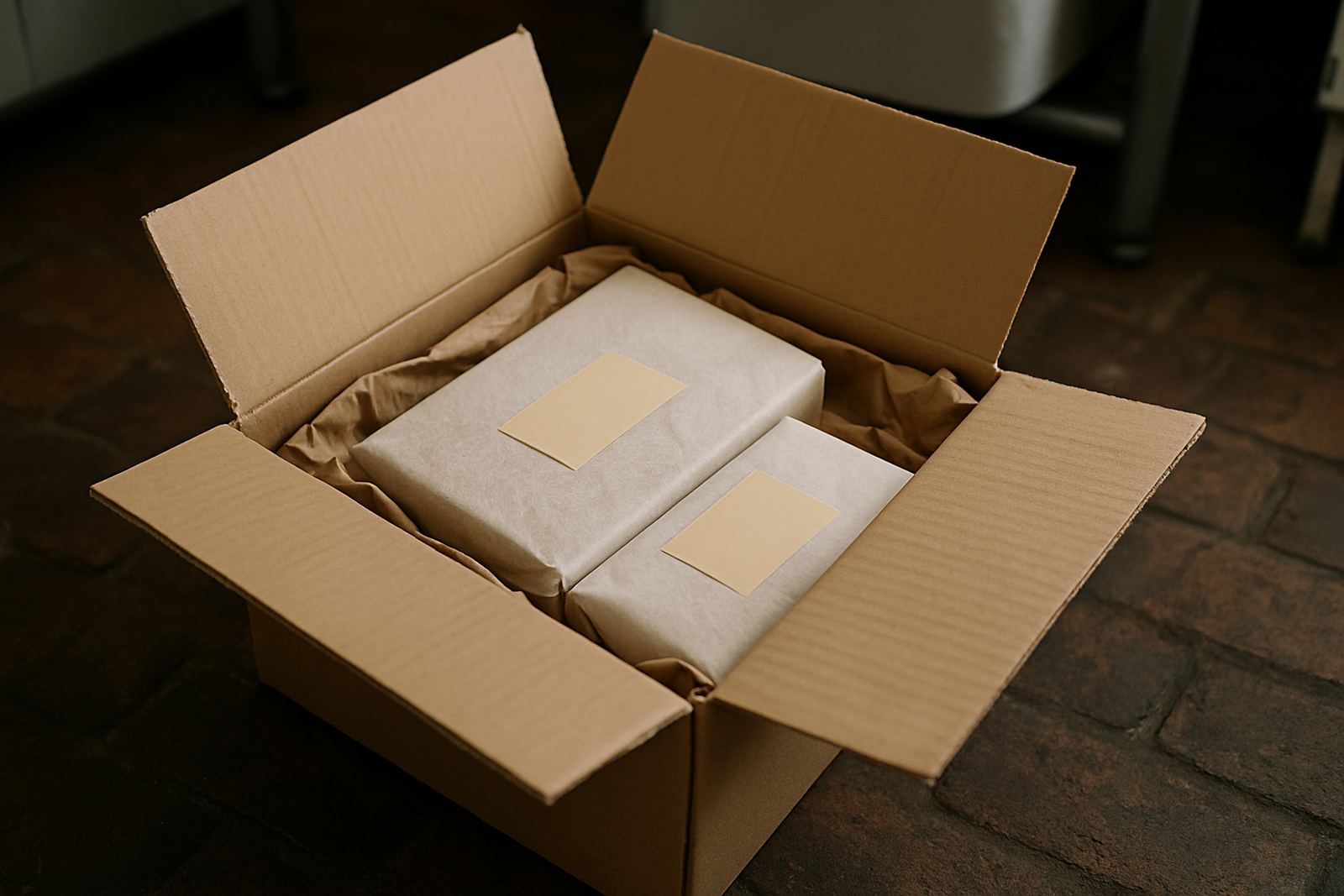
For posting or couriering, packaging matters. Loose stacks can shift and rub against each other in transit, so each suite should be separated and supported. If the stationery is going nationwide, strong outer packaging is worth the small extra cost. It saves on reprints and keeps the edges neat when the box goes from Cape Town to Johannesburg, Durban or a farm venue outside Stellenbosch.
A detail many people forget is size. Deckled edges can make a card look slightly larger or less uniform than a standard machine-cut piece, so pocket folds and envelope sizing should be checked early. A few millimetres can matter when the final invitation must sit squarely inside the envelope without forcing the paper.
A Local Example from Woodstock to the Winelands
One of the nicest uses of deckled edges is for a Cape wedding with a modern but soft look. A couple based in the southern suburbs recently chose a layered invitation with a foil monogram, a deckled main card and a matching details insert. The ceremony was in Stellenbosch, with guests travelling from both Cape Town and Paarl.
They wanted stationery that felt elegant but not stiff. We paired warm white paper with a fine metallic detail and kept the envelope addressing simple so the deckled edge remained the focus. The result felt suited to the setting, from the first envelope to the final table card. It also travelled well because the finished pieces were packed flat and couriered carefully.
That is the real strength of this style. It can feel luxurious without looking overdone, which is why it works for both intimate gatherings and larger celebrations.
What to Ask Before You Commit to the Style
If you are thinking about deckled edges, it helps to ask a few practical questions before production begins. This keeps expectations clear and helps the final stationery look polished rather than improvised.
- Will the deckled edge be on one side or all sides?
- Does the paper stock suit foil stamping and any letterpress finishing?
- How will the pieces be packed for collection or nationwide delivery?
- Will the envelope size allow a little room for the edge texture?
- Can the design still be read clearly once the soft edge is added?
These details matter because deckled edges are strongest when they are part of the plan, not an afterthought. With the right paper and finishing, they add warmth without losing structure. That balance is what makes the style so enduring.