
Start With the Invitation Set, Not the Box
Before anything goes into a carton, the full stationery set should be checked piece by piece. Invitations, RSVP cards, envelopes, envelope liners, wax seals and any small inserts must be counted, aligned and grouped in the right order. If a suite is assembled loosely, the courier journey can shift items around and leave corners rubbed or foil marked. That is why the packing stage starts with accuracy, not tape.
For premium stationery, weight and thickness matter too. A heavy board set with layered finishes needs more support than a single flat card, and a boxed gift set needs different handling again. In our Woodstock studio, we always separate fragile finished pieces from bulkier items like belly bands or packaging sleeves before sealing the parcel. A neat pack is easier to check and easier to unpack at the other end.
- Count every item against the approved order list.
- Keep finished pieces in the correct sequence for assembly.
- Separate rigid items from light inserts to prevent scuffing.
- Check that all names, dates and addresses are correct before sealing.
Protect Foil, Embossing and Letterpress From Friction
Foil stamping, letterpress finishing and raised detail can all be damaged by rubbing, even if the parcel never gets wet. The biggest risk is movement inside the pack. A box with too much empty space allows cards to slide, while a pack that is too tight can press marks into the surface. The right balance is snug, not crushed.
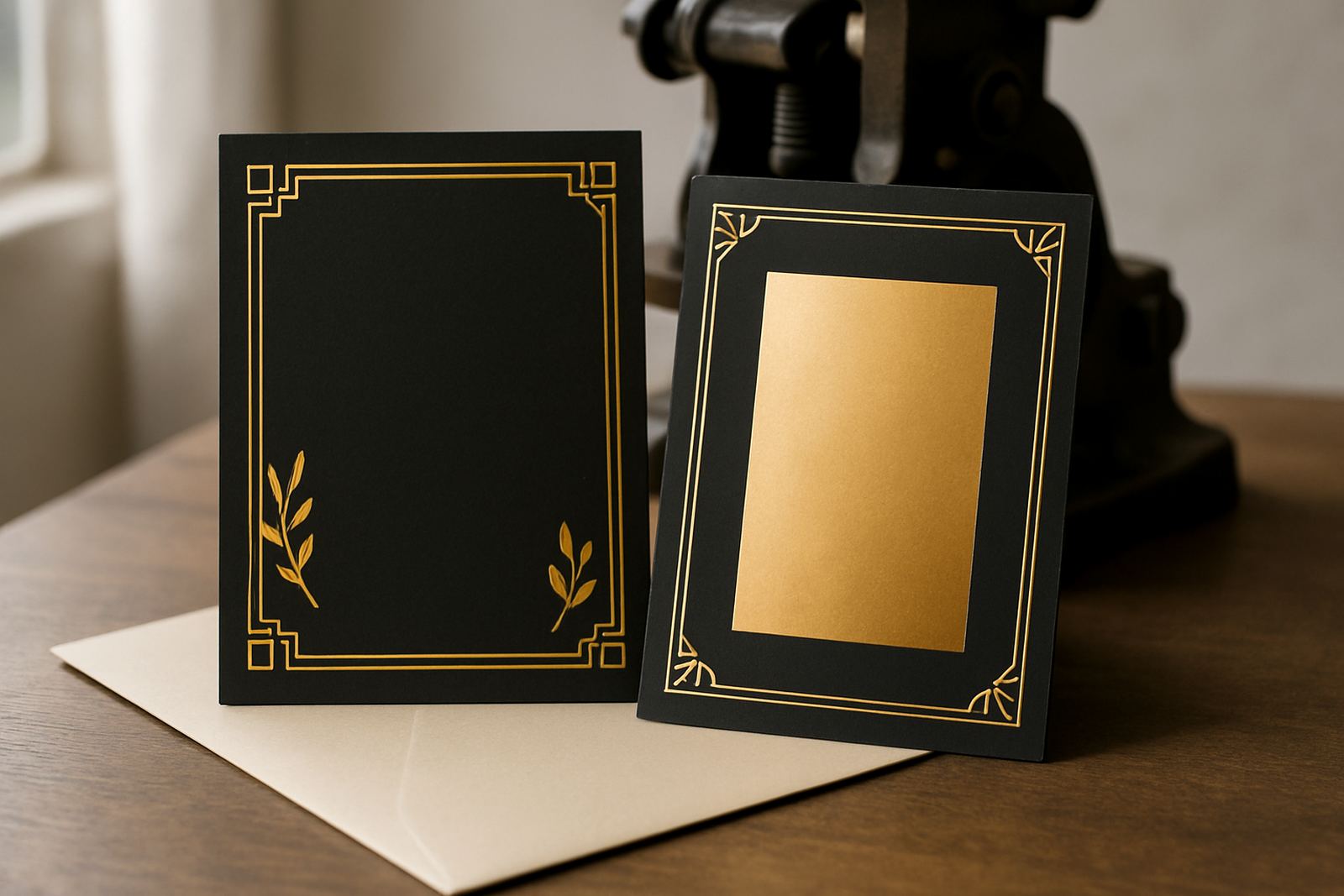
We use interleaving sheets, tissue wrap and board support where needed so that printed faces do not touch each other directly. For invitations with wax seals, we keep the seal protected from pressure and place a soft layer around it so it does not crack. If a suite includes metallic foil, it is also worth avoiding rough kraft liners or abrasive fillers that can dull the shine. A little extra care here saves a reprint later, which is always better than dealing with a disappointed bridal couple the week before the event.
- Use tissue or slip sheets between finished cards.
- Keep foil faces from touching each other.
- Protect wax seals with soft wrap and a stable tray.
- Do not overfill the carton or force the lid down.
Choose Packaging That Handles South African Delivery Conditions
Courier delivery in South Africa can mean long distances, sorting hubs, changing temperatures and rougher handling than most people expect. A parcel leaving Cape Town for Johannesburg or Durban may pass through several transfer points. That is why stationery should travel in a rigid outer box, with a strong inner wrap and no loose corners. In coastal areas like Cape Town, humidity can also affect paper if it is packed too early or stored in a damp room.
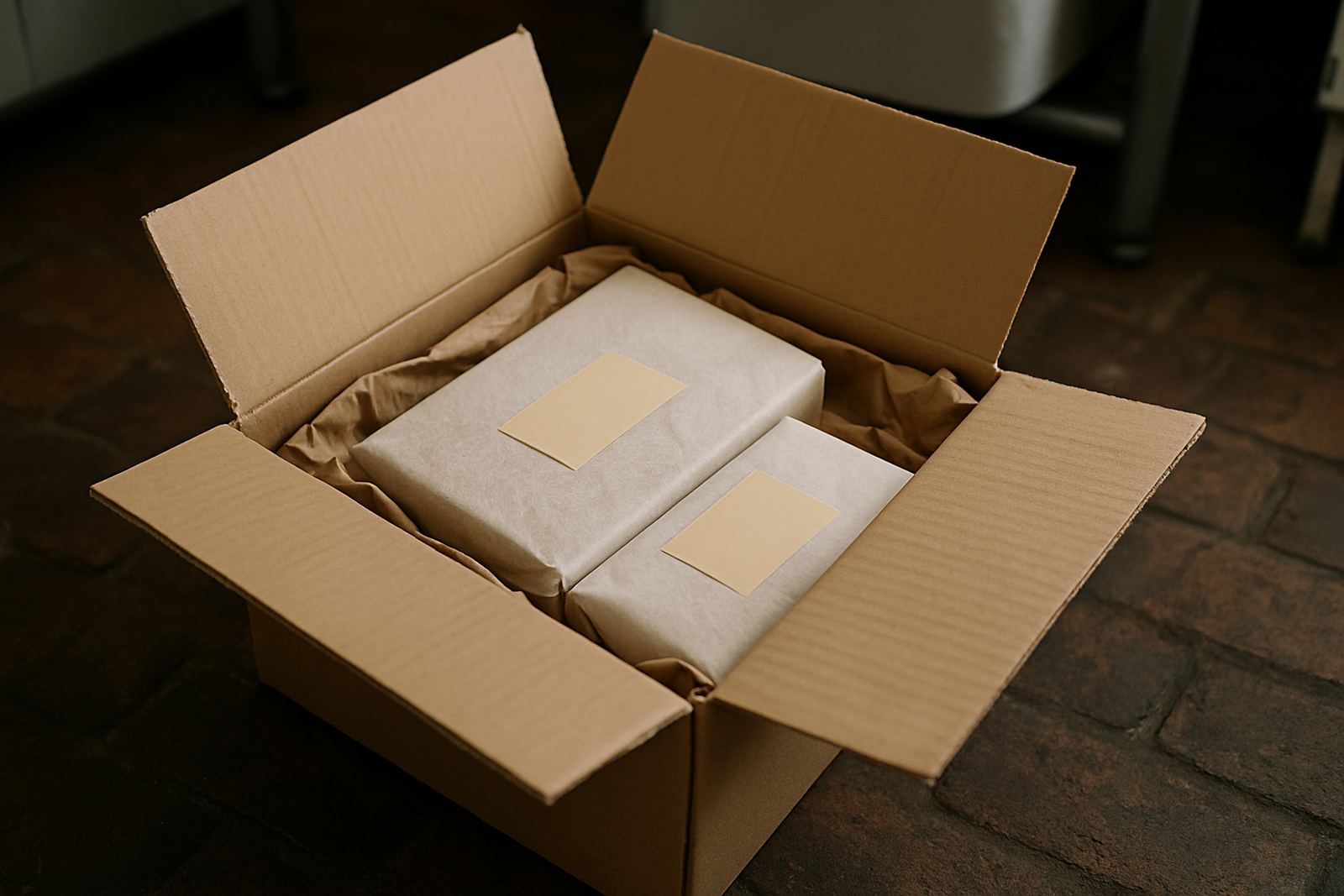
We recommend a sturdy outer carton sized to the contents, plus inner reinforcement where the set is delicate. If the parcel includes multiple invitation suites for a wedding party, each suite should be bundled before all the bundles are placed together. For gift packaging or event day stationery, the same principle applies: keep movement to a minimum and give the item shape support. For local clients in the Southern Suburbs or Atlantic Seaboard, hand delivery may sometimes suit a tight timeline, but for nationwide orders the pack must be ready for the full courier trip.
- Use a rigid carton with a close fit.
- Add support so corners and edges stay flat.
- Keep paper away from damp storage areas before packing.
- Bundle multiple suites separately before boxing together.
Label Clearly and Keep the Contents Easy to Check
Good courier packing is also about clear information. The outside of the parcel should show the delivery address exactly as supplied, with any unit number, estate access detail or business park note added where relevant. If the parcel has a fragile contents note, it should be placed where the courier can see it without opening the box. We also keep internal item notes where needed, especially for large wedding orders with separate family packs or event day stationery.
An itemised packing slip helps the client check the contents as soon as the parcel arrives. This matters when a couple is receiving stationery in Stellenbosch or Paarl and wants to confirm quantities before the weekend. It also helps if one part of the order is for the wedding table and another part is for the welcome gift set. Clear packing means fewer calls, fewer mix-ups and less time spent trying to match envelopes to inserts after delivery.
- Write the delivery address in full and legibly.
- Add contact and access details for estates or offices.
- Include an itemised slip inside the parcel.
- Mark fragile packs where needed, but do not rely on the label alone.
Build in Time for Proofing, Assembly and Courier Cut-Offs
One of the easiest ways to protect a premium stationery order is to allow enough time for the full process. Custom design, colour matching, artwork proofing and final assembly can each affect the packing stage. If a client approves artwork late on a Thursday and wants delivery by Monday, the order may need a faster pack than is ideal. Good planning gives the team time to check alignment, dry foil properly and assemble the suite with care.
In practical terms, we always suggest that clients plan courier dates with a buffer, especially for weddings and corporate events. If a parcel is going to Somerset West, Pretoria or George, the route and handling time may differ, and weather can also play a part. A local example is a bride in Woodstock sending a suite to family in the Northern Suburbs while the main order travels to a venue near Stellenbosch. In that case, the items may need separate packs so every destination gets the right count, and the timing can be done without a rush.
- Allow time for proofing before pack-out begins.
- Confirm courier cut-offs with a buffer of at least one working day.
- Separate orders going to different addresses.
- Plan ahead for weekends, public holidays and event dates.
Open the Parcel Carefully and Store It Well on Arrival
Courier packing does not end when the box leaves Woodstock. The way a parcel is opened matters too. We always advise clients to open the carton on a clean, dry surface and remove the contents one layer at a time. If the order includes wax seals, ribbon or envelope addressing, those items should be handled gently and kept out of direct sun and moisture until use. A sharp blade can easily score paper, so a careful opening is worth the extra minute.
Once unpacked, premium stationery should be stored flat in its cartons or sleeves until it is ready for assembly or event day setup. If the venue is humid or the air conditioning is strong, avoid leaving the suite near open windows, kitchen steam or direct vents. A client in Cape Town who receives a large wedding order a few days before the event can keep the cartons closed and stacked flat until the planner is ready to set up. That simple step helps the paper stay crisp and the foil looking right.
When premium stationery is packed properly, it arrives ready to impress rather than needing repairs. That is the standard we work to for clients across South Africa, from the Atlantic Seaboard to the Winelands and beyond.