
Why Paper Weight Matters Before the First Fold
When clients ask what makes an invitation feel premium, paper weight is usually one of the first things we discuss. A heavier sheet does not only feel more substantial in the hand, it also behaves differently during scoring, folding and finishing. That matters when you are planning wedding invitations, event stationery or a full suite with inserts, RSVP cards and envelopes.
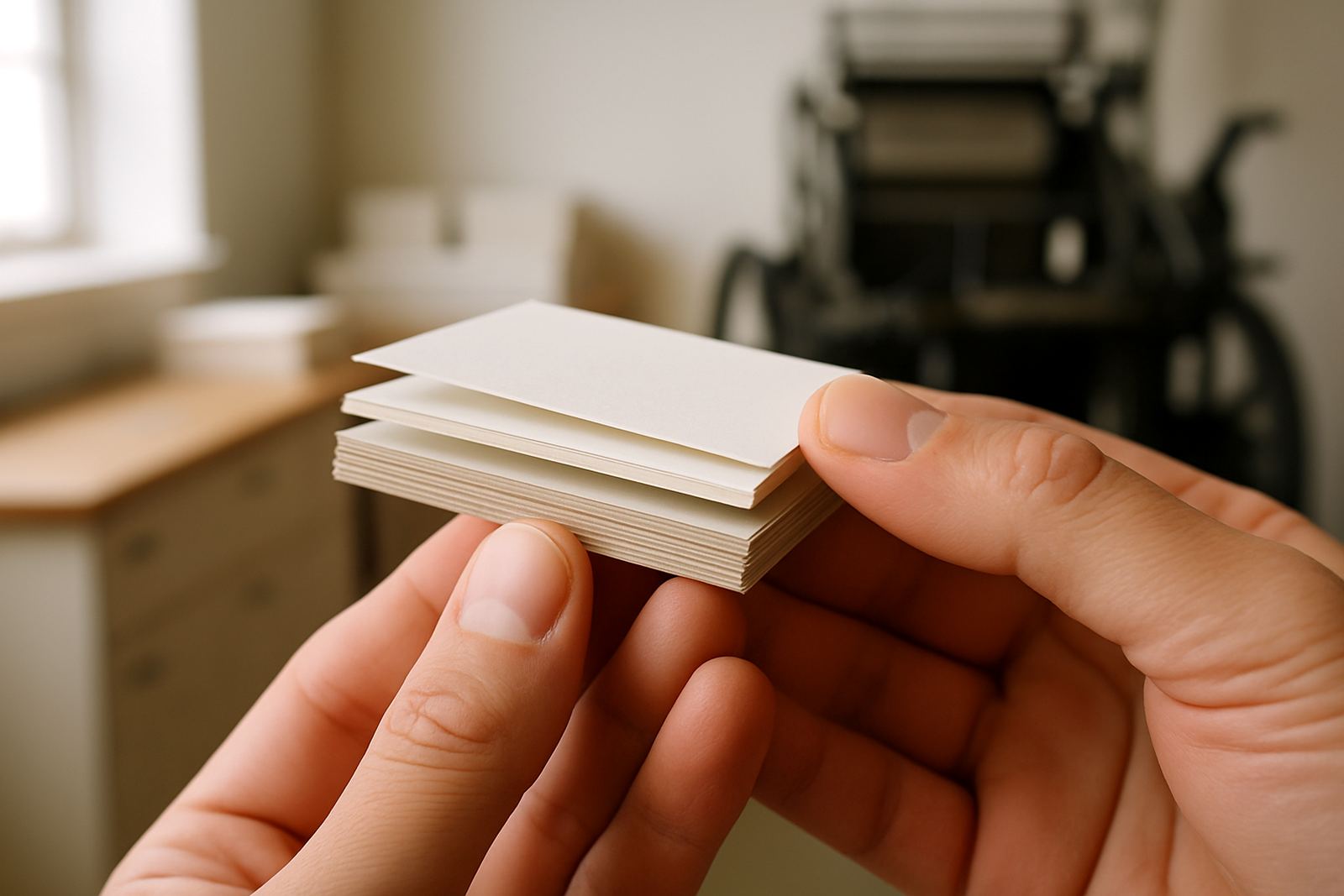
In practical terms, paper weight is measured in grams per square metre, or gsm. A lighter sheet around 120gsm may suit inserts, map cards or simple information slips, while 250gsm to 350gsm is often chosen for invitation cards that need more body. Once you move into thicker stock, the card can support foil stamping, letterpress finishing and layered assembly much better. It also gives the package a more formal feel the moment it is lifted from the envelope.
For Cape Town clients, there is also a local reality to consider. In Woodstock and along the Atlantic Seaboard, humidity can affect paper if it is stored badly, and coastal moisture can make light stock curl. Heavier paper tends to hold its shape better, especially when you are working with custom pieces that must travel by courier to Paarl, Stellenbosch or Somerset West.
How Weight Changes the Look of Foil and Print
Foil stamping reacts strongly to the surface beneath it. On a smooth, heavier sheet, foil tends to sit cleanly and give a sharper edge. On very light paper, the impression may still look elegant, but you can see more movement in the sheet and the finish may feel less stable. If the paper bends too easily, the final result can look less refined even when the artwork is beautiful.
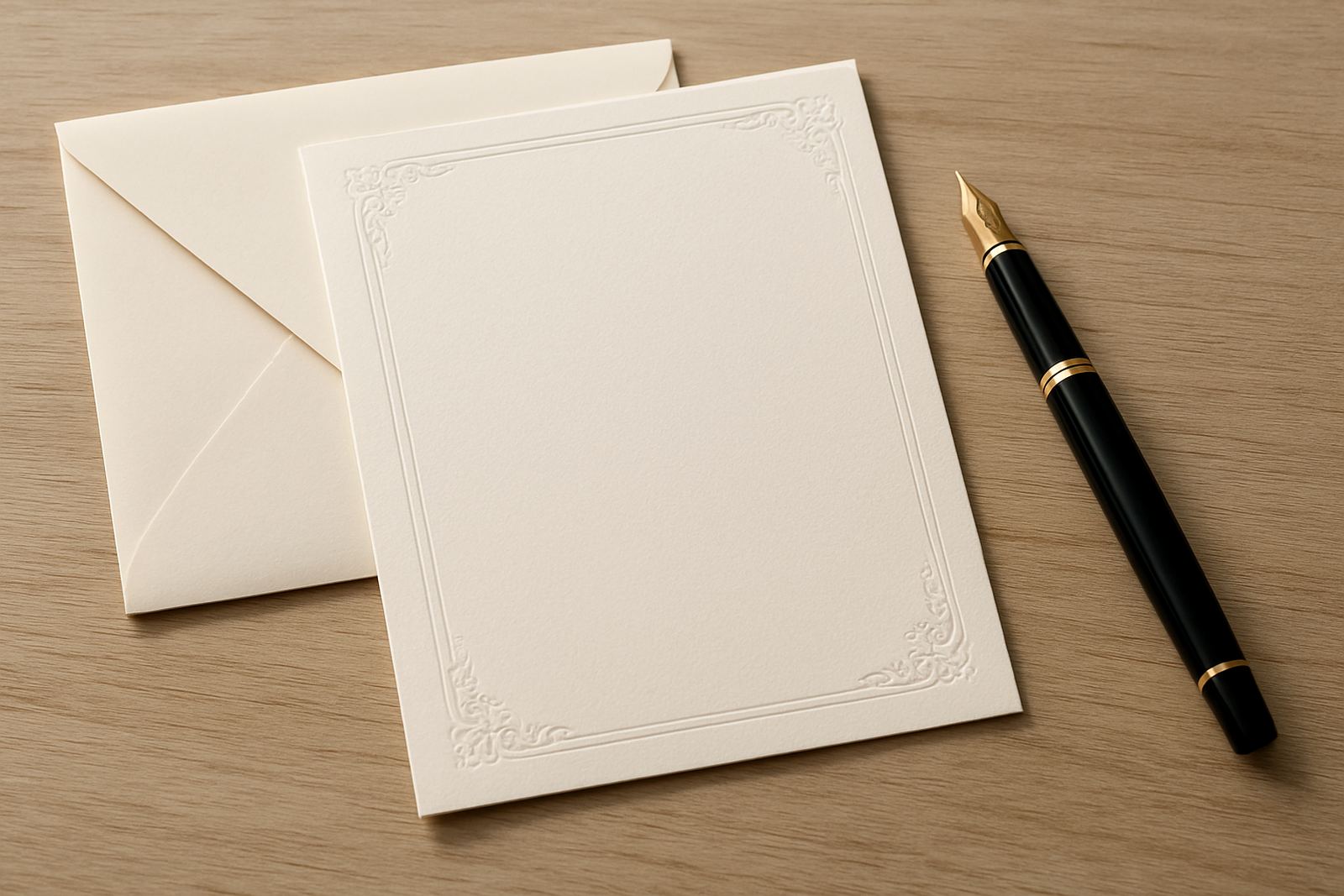
Print coverage also changes with weight. Dark ink blocks, fine lettering and full-colour artwork can all behave differently on different stocks. A thicker card usually hides the impression from the reverse side better, which is useful if you want the back of the invitation to stay clean. For designs with blind debossing or letterpress finishing, the paper needs enough fibre strength to hold the pressure without cracking.
The right choice depends on the design, but there are some useful rules of thumb:
- 100gsm to 170gsm: better for inserts, lighter notes and envelopes
- 200gsm to 250gsm: suitable for flat invitations and printed information cards
- 300gsm to 350gsm: a common choice for formal invitation fronts and layered suites
- Above 350gsm: best for premium presentation pieces, but folding and postage need more planning
Not every design needs the heaviest paper available. Sometimes a carefully chosen mid-weight stock with the right finish gives a better result than a very thick card that is difficult to fold or mail.
Choosing the Right Structure for Suites and Envelopes
A complete stationery suite rarely uses one paper weight only. The invitation card may be a heavier stock, the RSVP card slightly lighter, and the envelope chosen for strength and closure rather than display. This is where structure matters. A well planned suite feels balanced in the hand and sits neatly inside the envelope without bulging.
We often advise clients to think about the journey the stationery will take. A wedding invite sent to a guest in Durbanville or by courier to a farm venue outside Stellenbosch needs to arrive flat and intact. If the cards are too thick, the envelope can split at the seams or the set may shift during transport. If the cards are too light, they can bend at the corners and lose that crisp first impression.
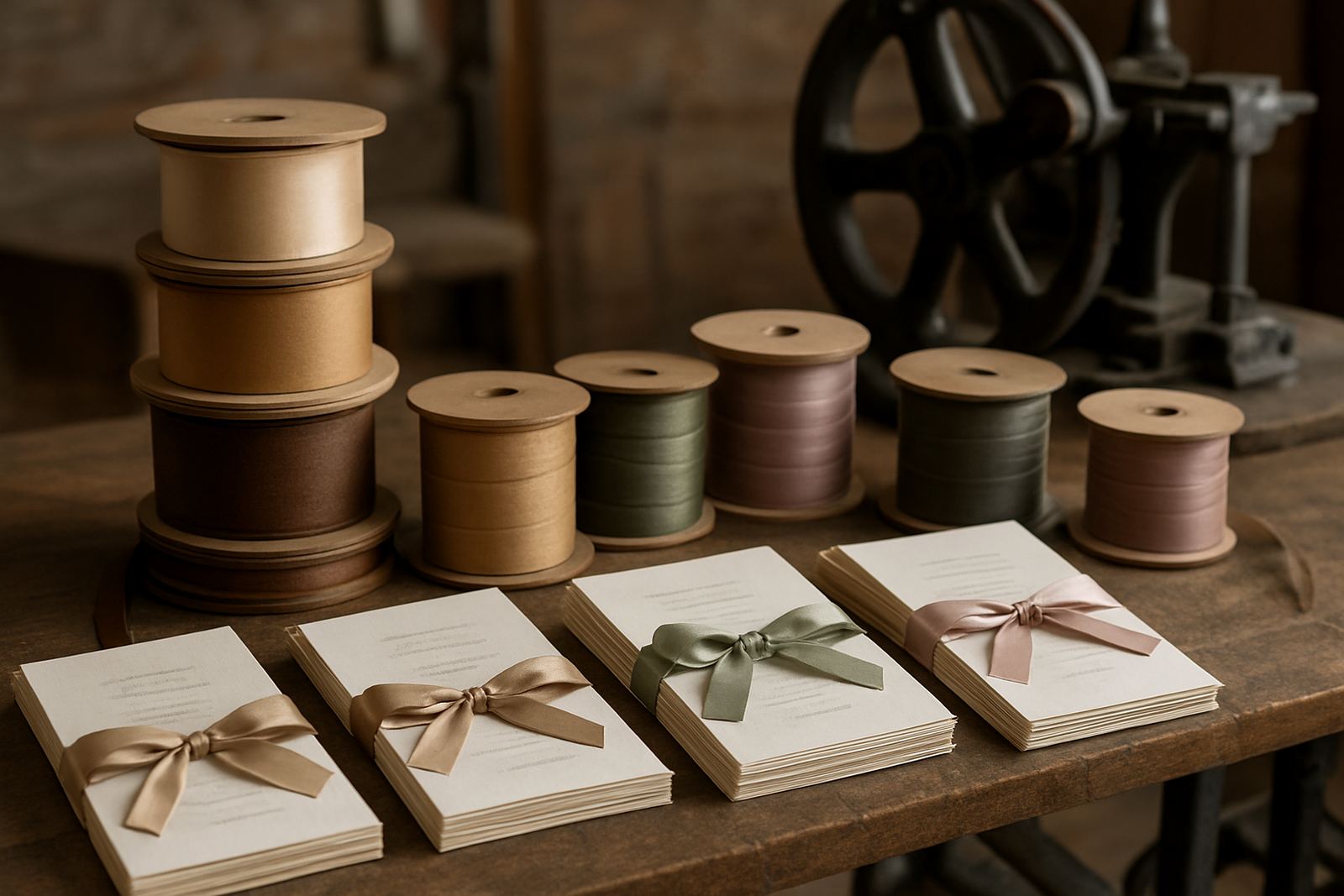
Structure also matters for assembly. Wax seals, belly bands, ribbon and layered inserts all add bulk. Add too many heavy pieces and the suite becomes difficult to post. In South Africa, where courier rates and postal size limits matter, it is wise to balance weight with practicality. A beautiful invitation is still expected to travel well.
- Keep the heaviest stock for the main invitation piece
- Use lighter paper for information cards and envelopes
- Allow room for any ribbon, seals or twine in the envelope
- Test the full assembled suite before final production
The Feel in Hand and the Impression It Gives
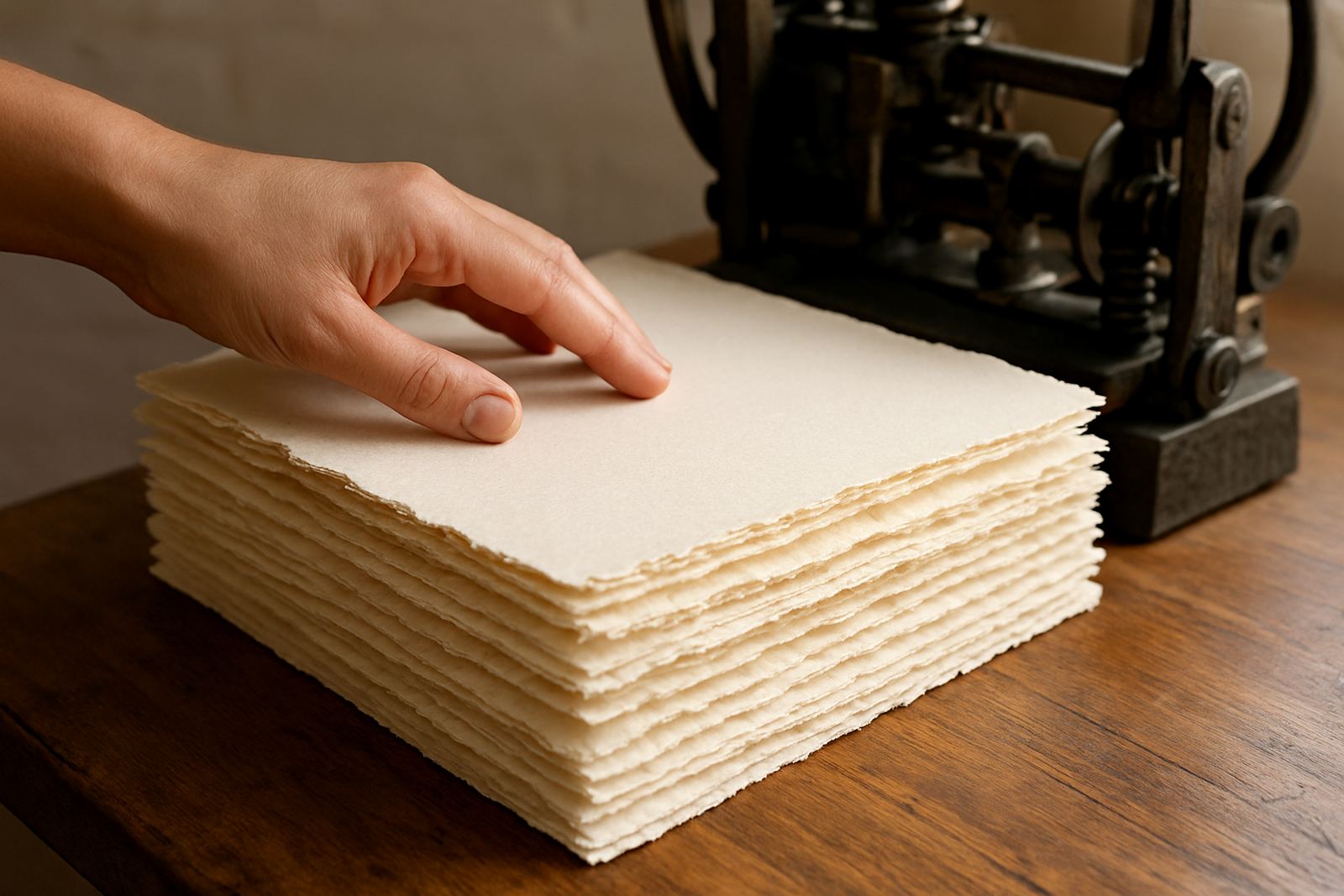
Guests notice paper weight before they read a single word. A thin invitation can still be attractive, but a card with proper body gives a sense of care and intention. It feels considered. That is part of why premium stationery makes such an impression at weddings, milestone birthdays and private functions.
The feel in hand is not only about thickness. It is about stiffness, surface texture and how the paper reacts when bent. Some stocks are soft and smooth, others are firm with a tactile grain. Two papers can have the same gsm and still feel completely different. That is why samples are important. A client may expect one look, then discover that a slightly textured 300gsm stock feels more luxurious than a glossy 350gsm sheet.
For invitation sets meant to reflect a personal style, the paper needs to match the tone of the event. A clean modern design in Cape Town city venues may suit a smooth white stock. A softer, romantic suite for a garden wedding in Somerset West may work better on a warmer-toned paper with a natural feel. The weight helps define that mood, and it does so quietly.
Practical Choices for Load-Shedding, Couriering and Climate
Paper choice is not made in a vacuum. In South Africa, production timing, load-shedding and delivery schedules all play a part. Heavier paper can be more forgiving during handling, but it also needs careful cutting, scoring and finishing. If work is delayed by power interruptions, the stock should be stored flat and away from heat so it does not warp. That is especially important in warmer months and in coastal areas where moisture can creep in.
Couriering adds another layer. A thick invitation suite may look wonderful, but if it pushes the parcel into a heavier courier bracket, the budget changes. Clients often want a premium result without unnecessary cost, so we consider both appearance and logistics. Sometimes the best solution is a stronger invitation card paired with lighter inserts and neat envelope addressing, rather than loading every element with the same heavy stock.
Local example: a Woodstock couple planning a winter wedding with guests in the Southern Suburbs and out toward Paarl may choose a 300gsm invitation card, 160gsm inserts and a sturdy envelope. That combination gives the suite presence, protects the edges during delivery and keeps the final parcel manageable. It is a sensible middle ground, and it still feels special when opened.
How to Select a Paper Weight With Confidence
If you are unsure where to begin, start with the final use of the stationery. Ask what the piece must do, not only how it must look. Does it need to fold? Will it carry foil, wax seals or heavy artwork? Must it fit into a posted envelope without damage? Once those questions are answered, the paper weight becomes easier to narrow down.
It also helps to think in layers. A wedding invitation suite might include a main card, details card, RSVP card and envelope, all with different weights. When selected carefully, the set feels coordinated rather than bulky. The best result is not always the thickest paper, but the one that supports the design and the handling of the finished piece.
We recommend checking samples before committing to production. The difference between 250gsm and 300gsm can seem small on paper, yet it can change the way foil stamps, how a folded card sits and how the entire invitation feels in the hand. A good paper choice makes the design look finished, and it usually saves time later because there is less adjustment needed in assembly and mailing.
In premium stationery, paper weight is not a detail to leave to chance. It is part of the structure, the presentation and the memory your guests carry home.