Why Ribbon Matters In Invitation Assembly
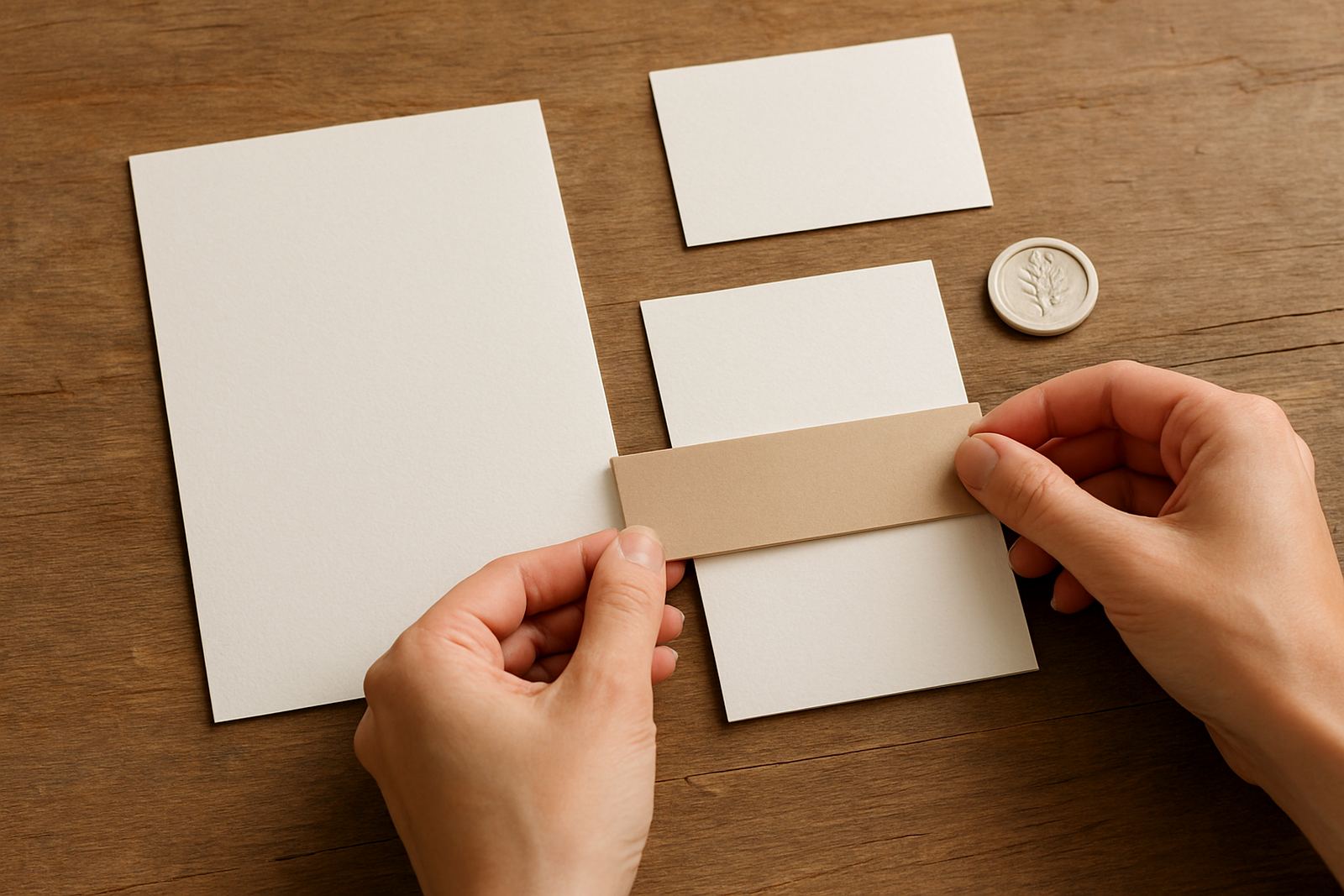
Ribbon is not just decoration. It helps hold layers together, frames the card, and gives the recipient a clear first impression of the stationery before they even open the envelope. In invitation assembly, ribbon also needs to work with the paper weight, envelope size and any extra pieces such as belly bands, wax seals or inserts.
For Cape Town clients, weather is worth thinking about too. In Woodstock and along the Atlantic Seaboard, coastal humidity can affect some ribbons more than others, especially if the suite is packed and stored for a few days before collection or courier dispatch. A flatter ribbon with a tidy knot or wrap usually travels better than anything bulky or overly loose.
- Choose ribbon after the paper and envelope size are finalised
- Keep the finish practical if the suite will be couriered nationwide
- Match the ribbon weight to the overall style, not only the colour
Common Ribbon Textures And When To Use Them
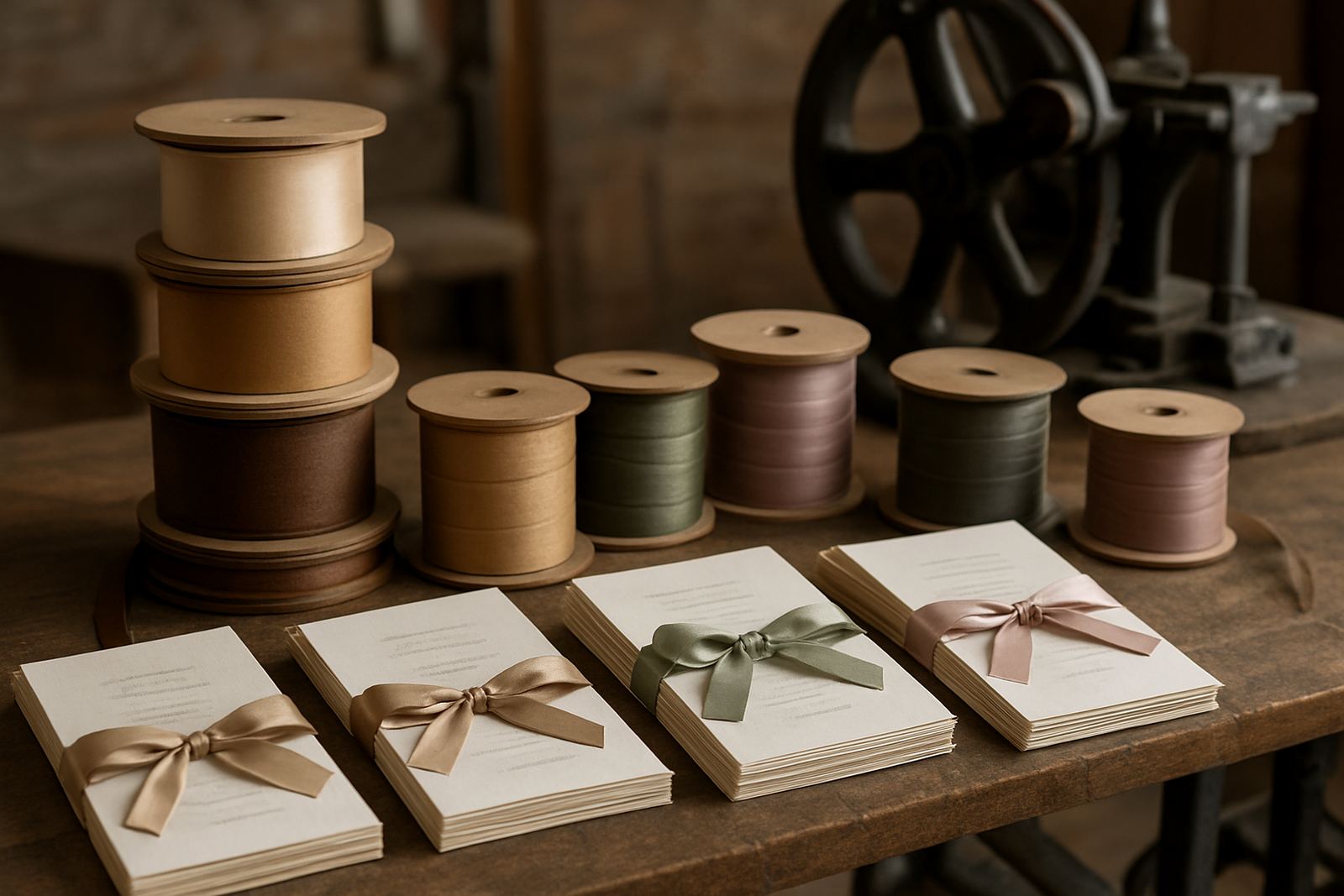
The texture you choose changes the tone immediately. Smooth satin gives a polished look, while matte ribbon feels softer and more understated. Textured ribbons can add interest, but they must still sit neatly around folded pieces and not overpower foil stamping or letterpress work.
For a clean modern suite, a narrow satin ribbon in a single loop often works well. For a more romantic or heirloom style, a wider ribbon with a gentle frayed edge or woven finish can add warmth. If the invitation includes a heavy card, try a ribbon that grips well and does not slide around when tied.
- Satin suits formal weddings and classic monograms
- Matte ribbon works well with soft colour palettes and minimal layouts
- Textured or woven ribbon adds depth to rustic or heritage-inspired stationery
In our experience, the best choice is often the one that feels balanced in the hand. A ribbon can be beautiful and still be practical, which matters when you are packing 80 or 120 suites for an event in Stellenbosch or Paarl.
Ribbon Colours That Work Best With Foil
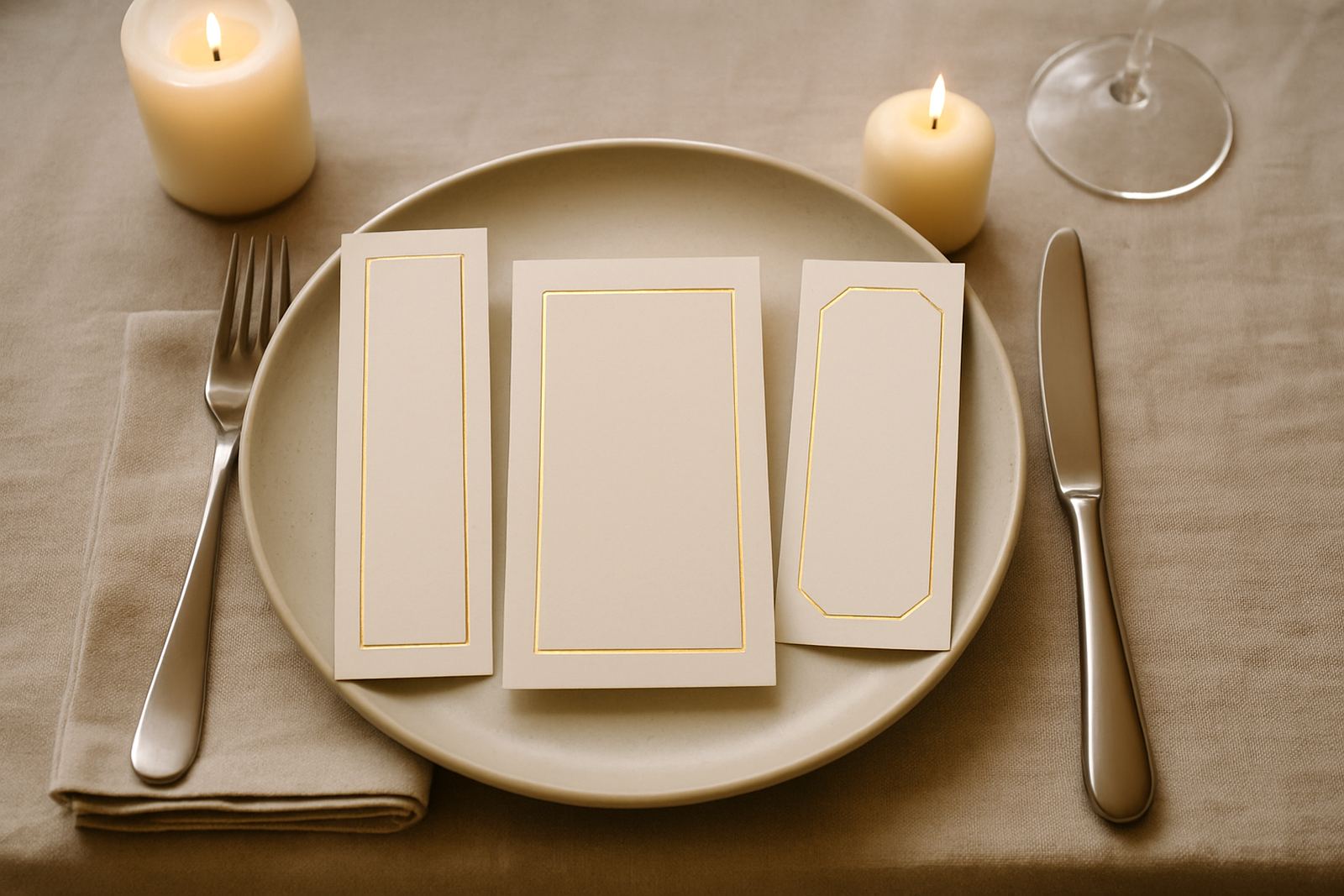
Colour matching is where the suite starts to feel complete. Gold foil, for example, pairs neatly with ivory, deep green, blush, navy and warm taupe. Silver foil often looks sharp with white, slate, pale blue and charcoal. Rose gold can soften a design without making it feel too formal.
If your invitation already uses a strong print colour, keep the ribbon calmer. Too many competing tones can make the suite feel busy. A simple rule is to let one element lead. If the foil is the star, use ribbon as support. If the ribbon is the feature, keep the foil restrained.
- Soft neutrals suit most wedding themes and are safer for mixed lighting at venues
- Dark ribbon can hide handling marks better on couriered suites
- Bright ribbon works best when the rest of the design is simple and clean
For a Cape Town example, a client in the Southern Suburbs recently chose ivory ribbon with blush foil on a creamy card stock. The result was gentle and elegant, and it held up well when the suites were packed for delivery to guests around the Western Cape, no fuss.
Width, Length And Tying Style
Ribbon width affects both appearance and structure. Narrow ribbon, usually around 6 mm to 10 mm, suits smaller invitation sets or detail work. Medium widths are better for standard wedding suites, while wider ribbon can anchor larger folded cards, belly bands or multi-piece packs. The wrong width can make a design feel crowded or underdone.
Length matters too. If the ribbon is too short, knots look tight and uneven. If it is too long, ends can fray or curl inside the envelope. For assembly work, it helps to measure one full sample before the rest are prepared, rather than guessing and trimming later.
- Use narrower ribbon for slim invitation cards and RSVP notes
- Use medium ribbon for most formal suites
- Use wider ribbon for statement packs or layered event stationery
Simple tying styles are usually the best. A flat knot, side knot or clean wrap is easier to stack and courier. Loose bows are lovely in photos but they can snag in transit, especially when a suite is packed into a box with other pieces.
How Ribbon Affects Couriered Stationery
When stationery is travelling from Woodstock to Johannesburg, Durban or smaller towns in between, the finish has to survive handling. Ribbon that is too bulky can crush against the envelope, while very soft ribbon can shift out of place. This is where neat assembly and good packing matter just as much as the material itself.
For nationwide delivery, we usually suggest ribbon finishes that lie flat, keep their shape and do not shed fibres onto the card. If a suite includes wax seals, the ribbon should be placed so the seal does not press into the envelope lining. The goal is for everything to arrive looking fresh, not re-tied on arrival.
- Flat finishes travel better than oversized decorative knots
- Secure loose ends so they do not catch during courier handling
- Check that the assembled suite still fits the chosen envelope size
Load-shedding can also affect production timing, so it is sensible to plan ribbon assembly in the same batch as the rest of the suite. That way the colour and finish stay consistent across the full order, rather than being completed in patches over several days.
Choosing Ribbon For Different Event Styles
Different events call for different finishes. A formal black-tie wedding may suit a crisp satin ribbon in ivory, champagne or black. A garden wedding in Somerset West might look better with a softer matte ribbon in sage or dusty pink. Corporate events and private functions often need a more restrained finish, with clean lines and no excess bulk.
Gift packaging and event day stationery can also use ribbon, but the finish should match the function. Table cards and favour boxes need ribbon that holds without slipping, while invitation suites can carry a more decorative choice if the envelope and insert sizes allow it.
- Formal weddings: satin, ivory, gold, champagne or black
- Garden or coastal weddings: matte, sage, blush, sand or pale blue
- Corporate stationery: narrow ribbon, neutral tones, minimal texture
When clients come in from the Atlantic Seaboard or Northern Suburbs, we often start by looking at the venue style, the paper stock and the envelope colour. That makes the ribbon choice much easier and avoids paying for finishes that do not suit the full suite.
A Practical Final Check Before Assembly
Before ribbon is approved for production, it is worth checking a few simple points. Does the colour hold its own beside the foil? Does the texture sit neatly on the paper? Will the suite still fit into the envelope once it is tied? These checks save time and avoid waste later.
If you are ordering a small run or a large guest list, ask for one finished sample before the full batch is assembled. That sample should be viewed in natural light and under indoor light, because ribbon can shift in tone depending on where it is seen. A colour that looks calm in the studio may read differently at home or at a venue.
- Confirm ribbon colour against the final paper and envelope choice
- Test one complete assembled suite before the rest are done
- Check that courier packing keeps the ribbon neat and unmarked
Ribbon finish is a small detail, but it carries a lot of weight in the final presentation. When it is chosen carefully, the whole invitation feels considered, balanced and ready to hand over.