Start with the names, dates and wording that matter most
The first check should always be the content that cannot be changed once production starts. Wedding names, event dates, venue details, titles and spellings all need to be confirmed line by line. It sounds simple, but small errors are the ones that stand out most on a finished invitation, especially when foil or letterpress is involved.
Ask the client or couple to read through the wording slowly, not just glance at it. In our Woodstock studio, we often see one person assume the other has already checked the final version, and that is where errors slip through. A missing full stop or a wrong month can affect the whole run and there is no easy fix once the paper has been printed and finished.
- Check full names exactly as they should appear.
- Confirm dates, times and venue names.
- Review RSVP wording, meal choices and dress code notes.
- Make sure honourifics, titles and family names are consistent.
Check the layout before you look at the decoration
After the wording has been confirmed, move on to layout. The spacing between lines, alignment of text and balance around borders all affect how the piece reads. On a printed invite, even a correct sentence can look wrong if it sits too close to an edge or too far from the decorative frame.
This step is important for foil stamping because the metal finish draws the eye. If a heading is set too high or the footer is crowding the design, the whole piece can feel off-centre. A neat layout also helps when the stationery is being assembled into suites with inserts, vellums, wraps or envelopes. It is worth checking whether line breaks make sense, because awkward wrapping can change the tone completely.
- Confirm margins, spacing and text alignment.
- Look for text that sits too close to folds, edges or trim lines.
- Check that headings and body copy are visually balanced.
- Make sure any page breaks or panel folds work neatly.
Review spelling, grammar and punctuation with fresh eyes
It helps to read the copy in more than one way. Read it silently, then read it out loud. Spelling mistakes are easier to catch when you hear how the line should flow. Grammar and punctuation matter too, because a stray comma can change the pace of a sentence or make an address look unfinished.
For stationery that is meant to feel elegant, consistency is just as important as correctness. If one line uses title case and the next uses sentence case, the page may look untidy even if every word is spelled correctly. We also recommend checking apostrophes, hyphenated words and the use of ampersands. A small typo can become a costly reprint, especially on a large guest list or a full suite.
- Check every word against the approved wording.
- Look for repeated words and skipped words.
- Confirm punctuation style is consistent throughout.
- Watch for capital letters that appear by mistake.
Make sure addresses and contact details are practical
Envelope addressing and reply details need extra care because they affect the guest experience as much as the printed design. If the invitation is going nationwide, the wording must be clear enough for courier handling and for guests to read quickly. Street names, suburb names and venue directions should all be checked carefully.
For local events in Cape Town, we often suggest a final look at suburb spelling and venue locality, especially for guests travelling from the Southern Suburbs, Atlantic Seaboard or out toward Stellenbosch and Paarl. If the event has more than one location, label each one clearly so no one arrives at the wrong gate. A neat envelope feels personal, but it still needs to be practical.
- Confirm postal addresses and venue directions.
- Check reply cards, contact names and RSVP deadlines.
- Make sure courier labels or guest envelope details are complete.
- Review any map notes, parking instructions or access codes.
Look closely at finish details before approval
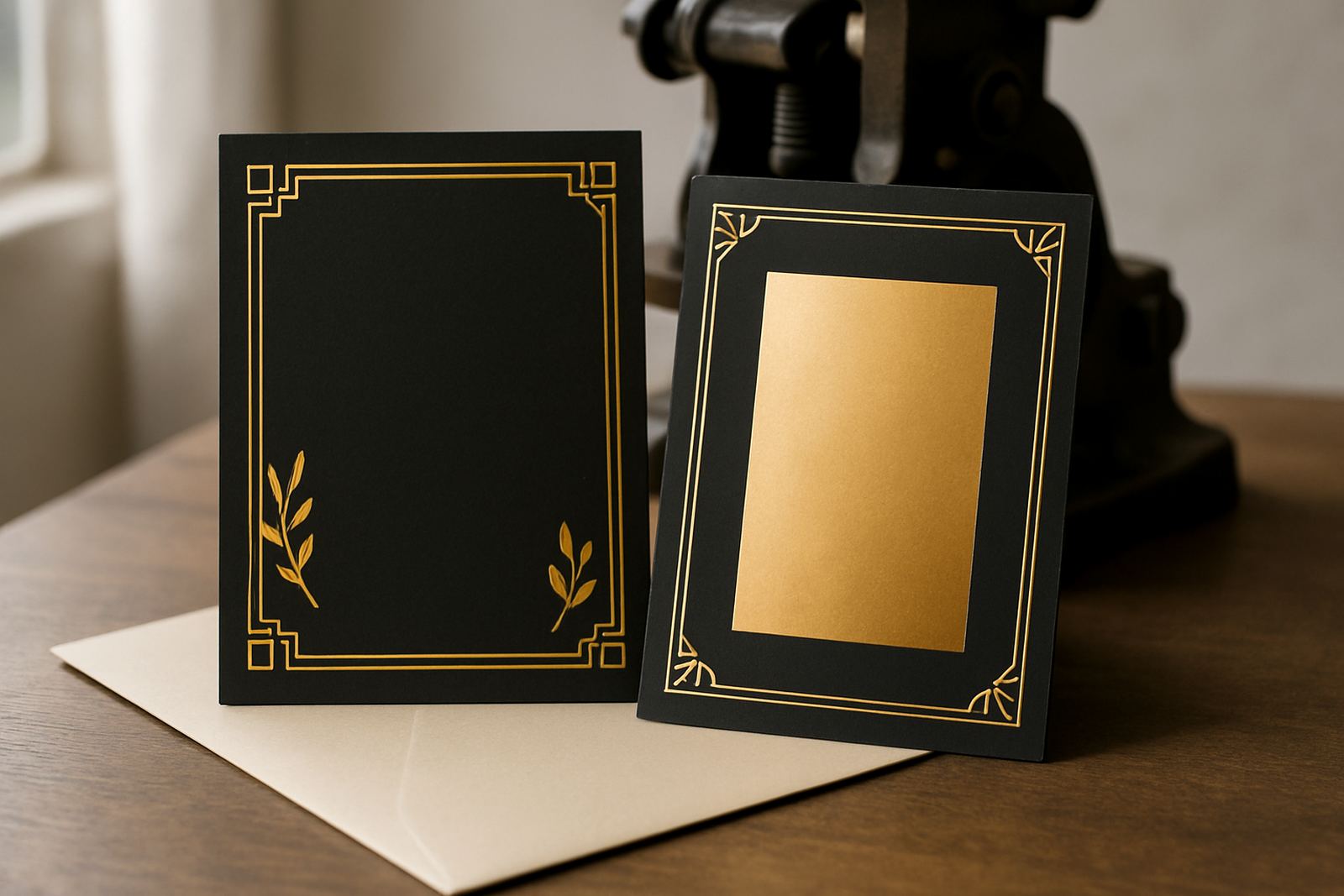
Foil stamping, letterpress finishing, wax seals and gift packaging all add character, but they also need precise proofing. The position of a monogram, the thickness of a border and the placement of a seal can all shift the feel of the piece. If the artwork is being paired with envelope lining or layered inserts, every element should line up properly before production begins.
This is also the stage to check colour references and paper choices. Some papers take foil better than others, and a shade that looks soft on screen may appear cooler in print. In coastal areas, humidity can also affect how certain papers sit during assembly, so finishing needs to be considered with the location in mind. A slight mis-match in colour or spacing is easy to miss at first glance but obvious on the finished item.
- Check foil placement and size against the layout.
- Confirm wax seal position and whether it blocks text.
- Review envelope lining, inserts and wraps together.
- Make sure paper colour and ink tone have been approved.
Use one final sign-off process before production starts
The safest proofreading habit is a clear final sign-off. One person should collect the corrections, update the text and then send back one final version for approval. That version should be read as if it is the first time anyone has seen it. This keeps the process tidy and avoids last minute confusion when several people are giving input.
At this stage, it helps to print the proof or view it on paper, not only on a screen. Paper reveals spacing issues, missing accents and awkward line breaks more clearly. Keep the proof beside the original brief and tick off each item one by one. If anything still feels uncertain, pause and ask the client to confirm before moving ahead. It is much easier to fix a detail now than after hundreds of pieces have been finished and packed for delivery.
- Approve only one final version.
- Compare the proof with the original brief line by line.
- Print the proof if possible for a last visual check.
- Confirm that all corrections have been applied before production.